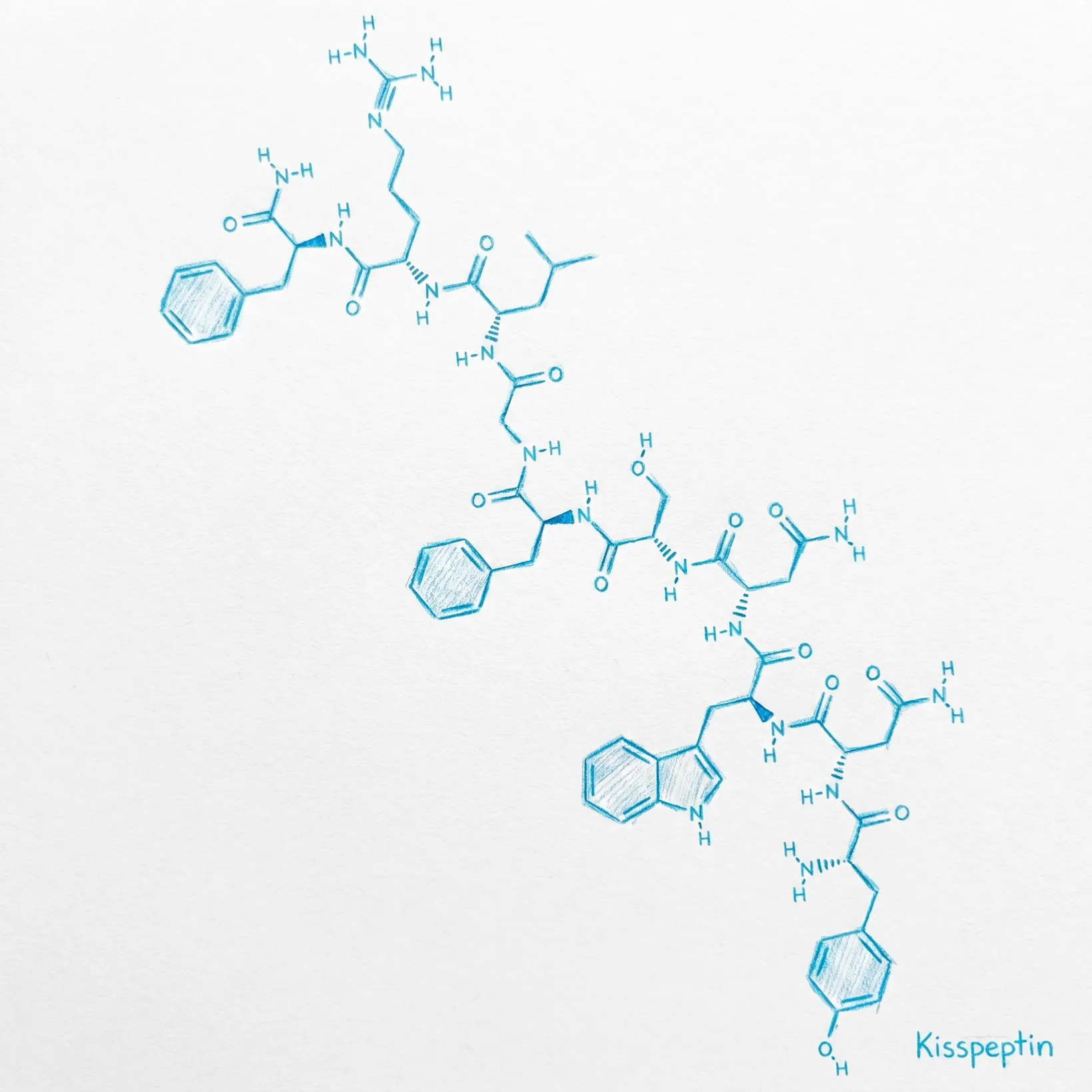
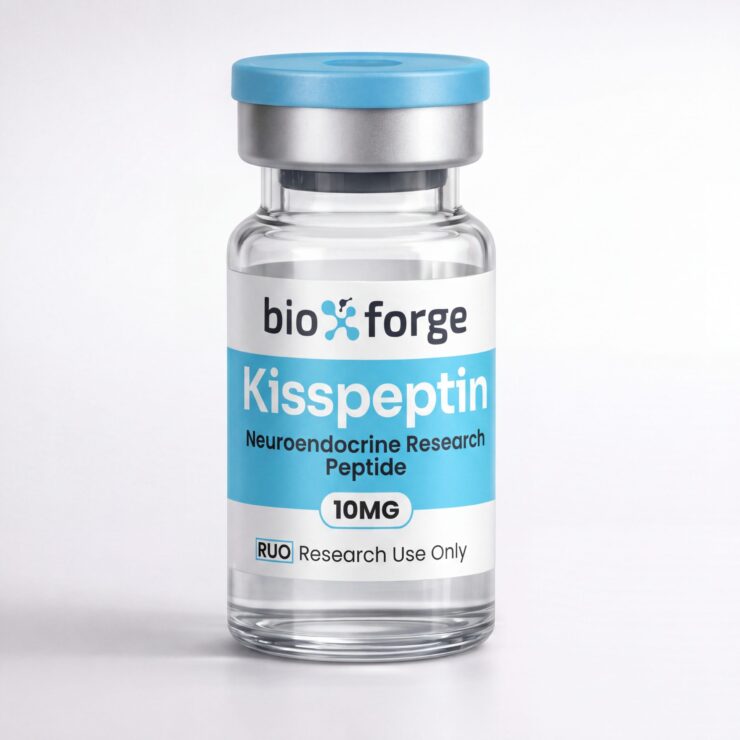
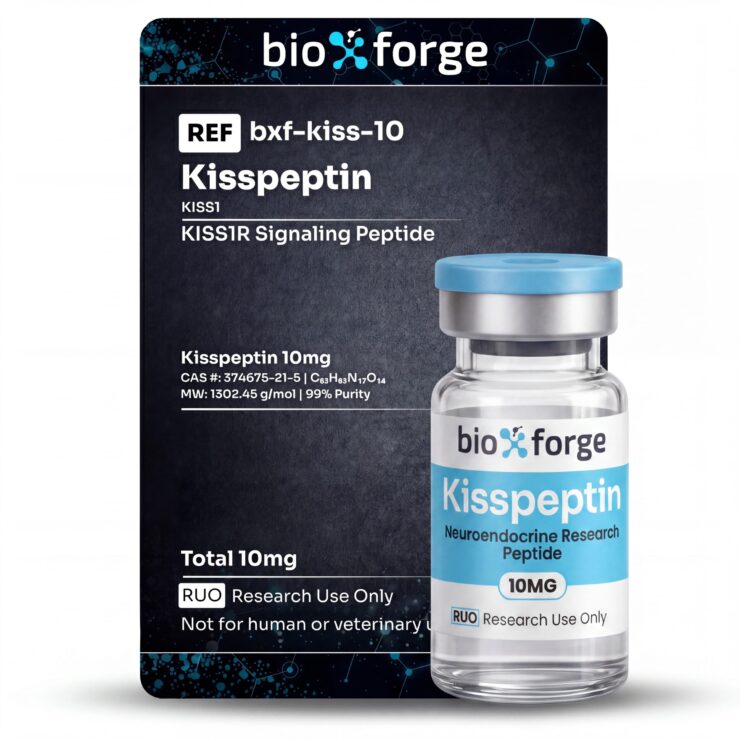
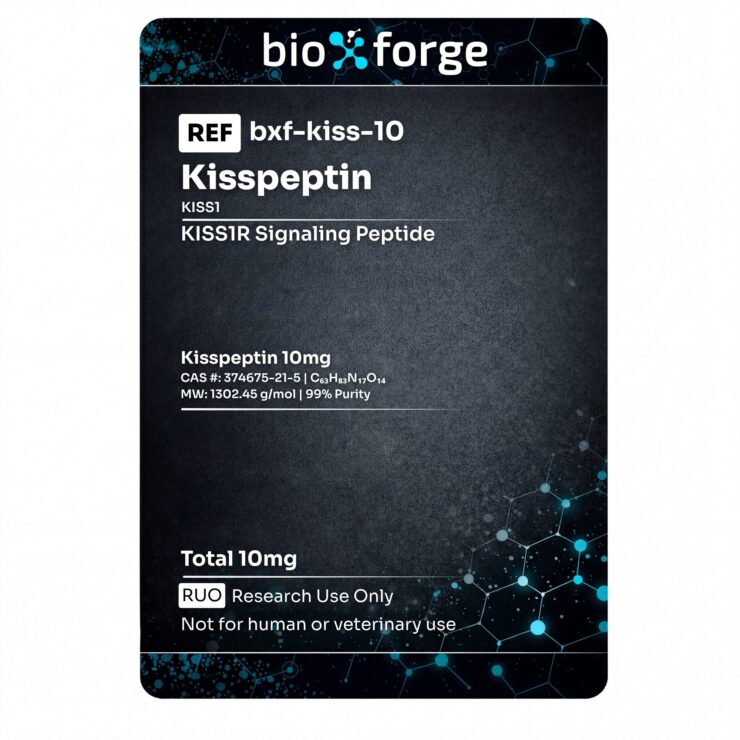
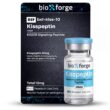
Kisspeptin is a family of endogenous neuropeptides derived from the KISS1 gene, with biologically active forms including Kisspeptin-10, Kisspeptin-13, and Kisspeptin-54. These peptides function primarily through activation of the kisspeptin receptor (KISS1R/GPR54), a G protein–coupled receptor involved in neuroendocrine regulation. In laboratory research settings, kisspeptin peptides are classified as hypothalamic regulatory neuropeptides and are widely utilized to investigate reproductive endocrine signaling and hypothalamic–pituitary–gonadal (HPG) axis modulation.
Mechanistically, kisspeptin signaling plays a central role in regulating gonadotropin-releasing hormone (GnRH) neuronal activity. Binding of kisspeptin to KISS1R activates intracellular signaling pathways involving phospholipase C, inositol triphosphate (IP₃), and calcium mobilization, resulting in stimulation of GnRH secretion in experimental models. This upstream modulation subsequently influences luteinizing hormone (LH) and follicle-stimulating hormone (FSH) signaling within the HPG axis. Because of its position near the top of the reproductive endocrine cascade, kisspeptin is frequently studied as a master regulatory peptide within neuroendocrine systems.
In vitro and preclinical research applications commonly include evaluation of receptor binding kinetics, hypothalamic signaling dynamics, and transcriptional responses associated with reproductive hormone regulation. Investigators may employ kisspeptin peptides in neuronal cell models or animal systems to study GnRH pulse generation, endocrine feedback mechanisms, and receptor-mediated signaling interactions. Different peptide lengths, such as Kisspeptin-10 and Kisspeptin-54, may also be compared experimentally to assess receptor affinity, stability, and signaling duration.
Overall, kisspeptin is regarded as a research-grade neuroendocrine peptide used to investigate central reproductive signaling pathways and hypothalamic regulatory mechanisms. Its defined receptor specificity and critical role in HPG axis communication make it a valuable tool for controlled laboratory studies involving endocrine physiology and neuropeptide signaling. Kisspeptin peptides are intended strictly for research use in regulated laboratory environments.