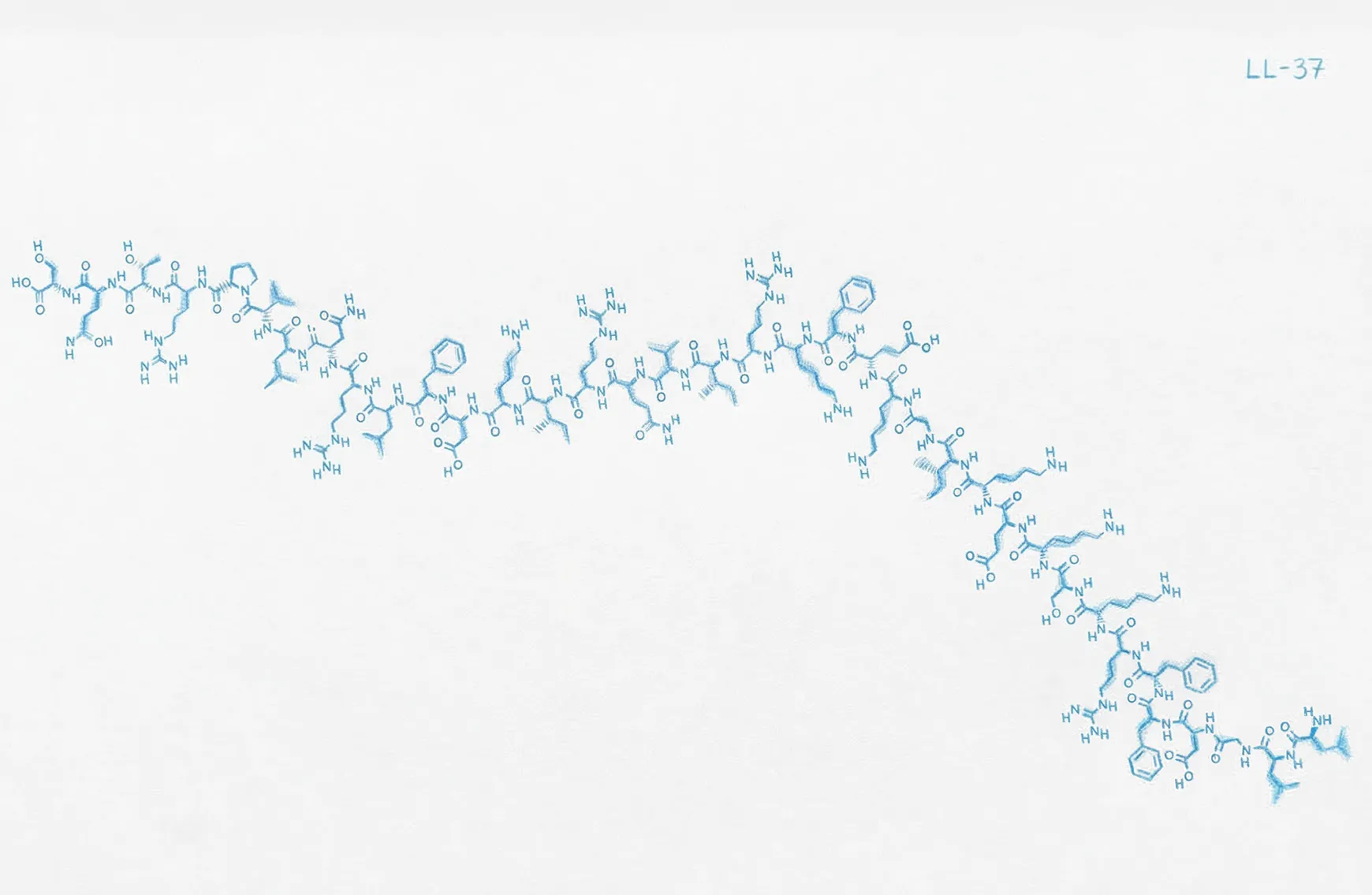
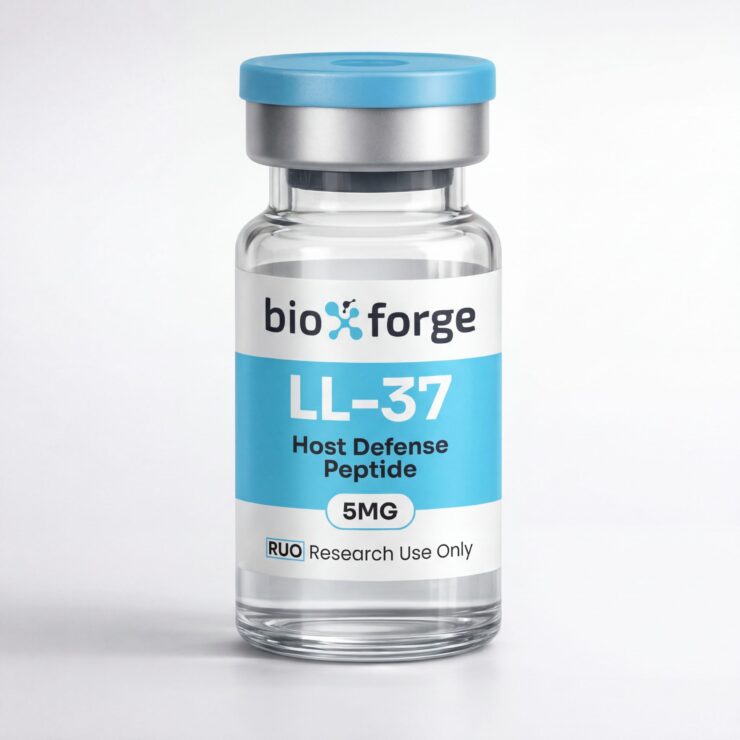
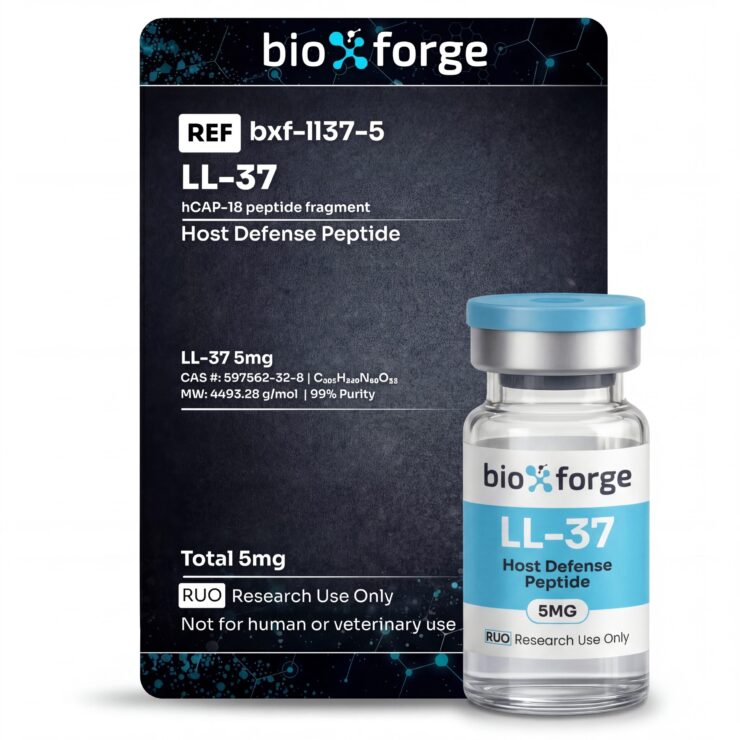
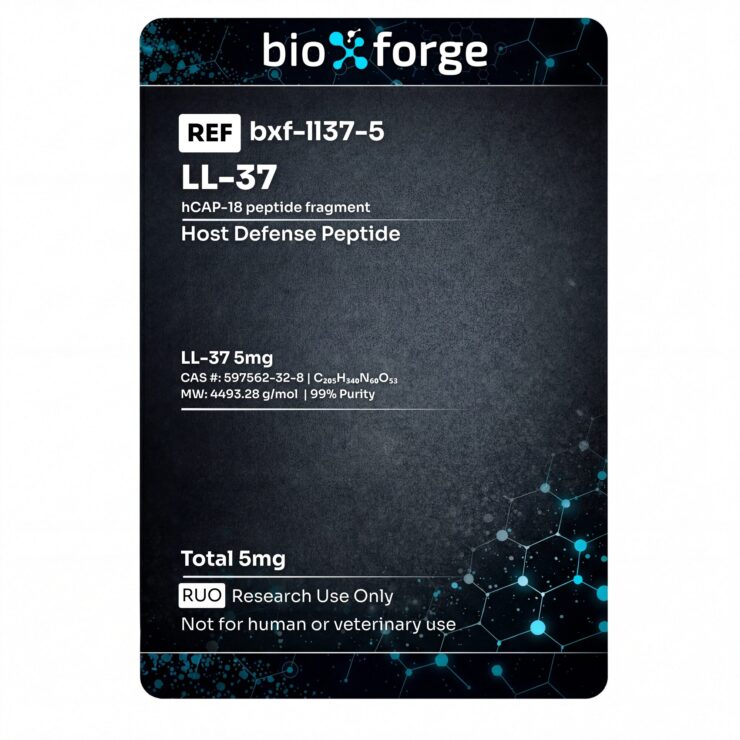
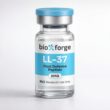
LL-37 is a cationic antimicrobial peptide belonging to the cathelicidin family of host defense peptides. It is derived from the proteolytic processing of the human cathelicidin precursor protein hCAP-18 and consists of 37 amino acids beginning with two leucine residues, which gives rise to its designation “LL-37.” In research contexts, LL-37 is classified as an antimicrobial host defense peptide and is widely studied for its role in innate immune signaling and barrier defense mechanisms.
Mechanistically, LL-37 exhibits amphipathic properties that allow it to interact with lipid membranes and microbial surfaces. In experimental models, the peptide has been shown to disrupt microbial membrane integrity and modulate cellular signaling pathways associated with immune responses. Beyond its antimicrobial characteristics, LL-37 has been investigated for its influence on chemotactic signaling, cytokine expression, and interactions with pattern recognition receptors involved in innate immunity.
In vitro and preclinical research applications commonly include studies of epithelial barrier function, immune cell activation, and inflammatory signaling pathways. Investigators may use LL-37 to examine cellular migration, wound-associated signaling cascades, and regulation of gene expression related to host defense. Due to its well-characterized structure and reproducible synthetic production, LL-37 is frequently incorporated into experimental systems evaluating peptide-mediated immune modulation.
Overall, LL-37 is regarded as a research-grade antimicrobial peptide used to investigate innate immune signaling and host–pathogen interaction mechanisms. Its amphipathic structure and multifunctional biological activity make it a valuable compound for controlled laboratory studies focused on immune regulation, epithelial biology, and peptide-mediated defense pathways. It is intended strictly for research use in regulated laboratory environments.