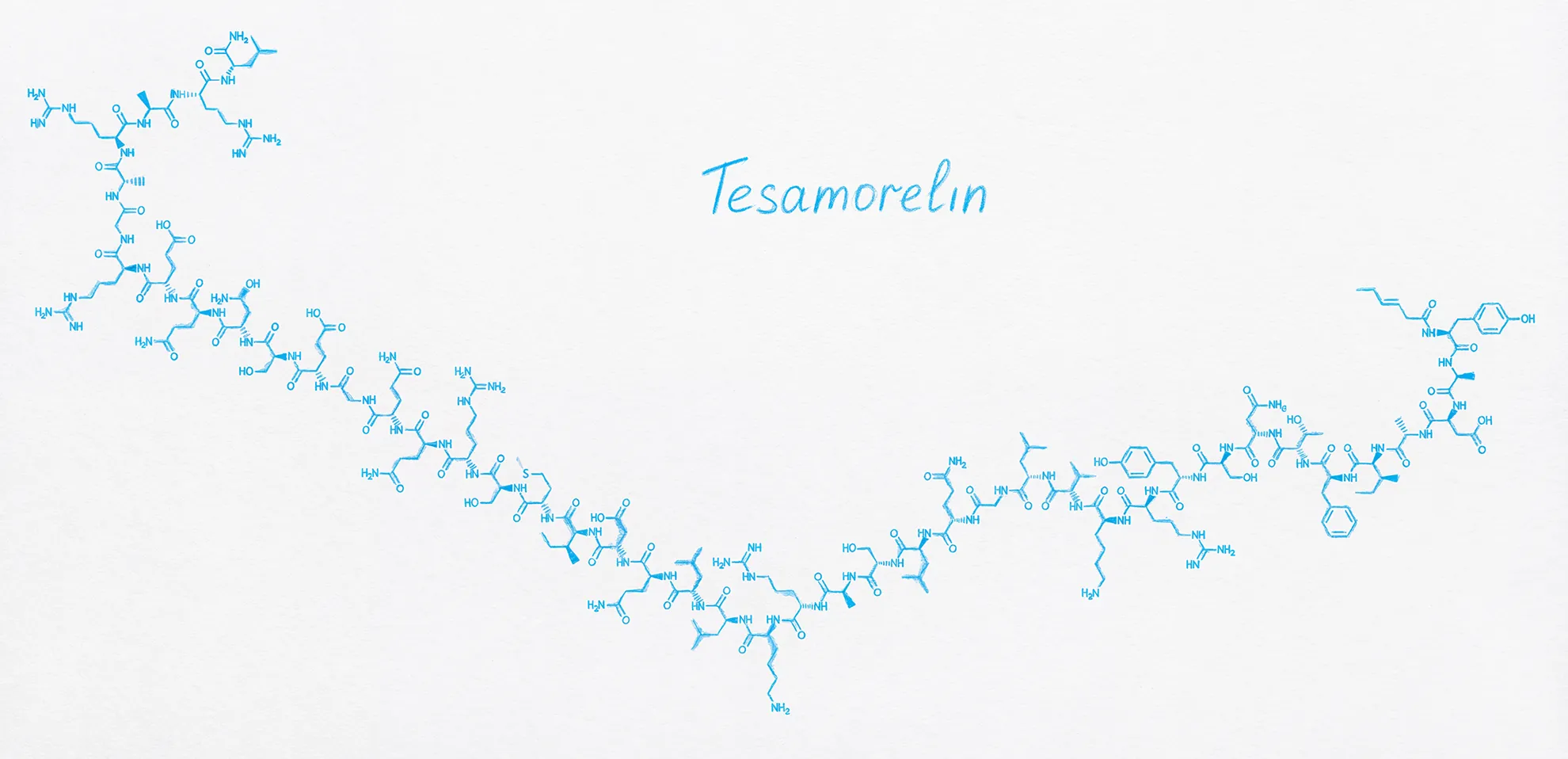
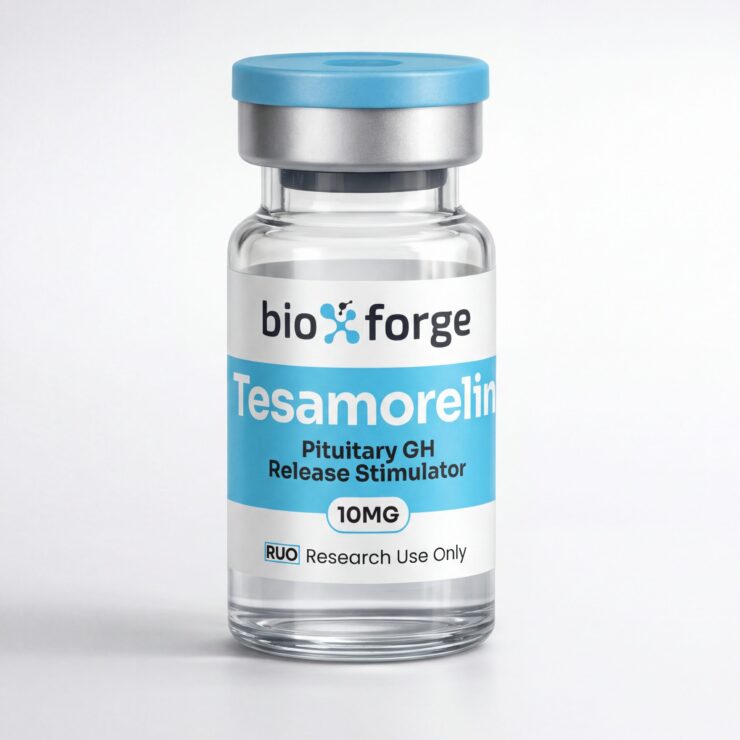


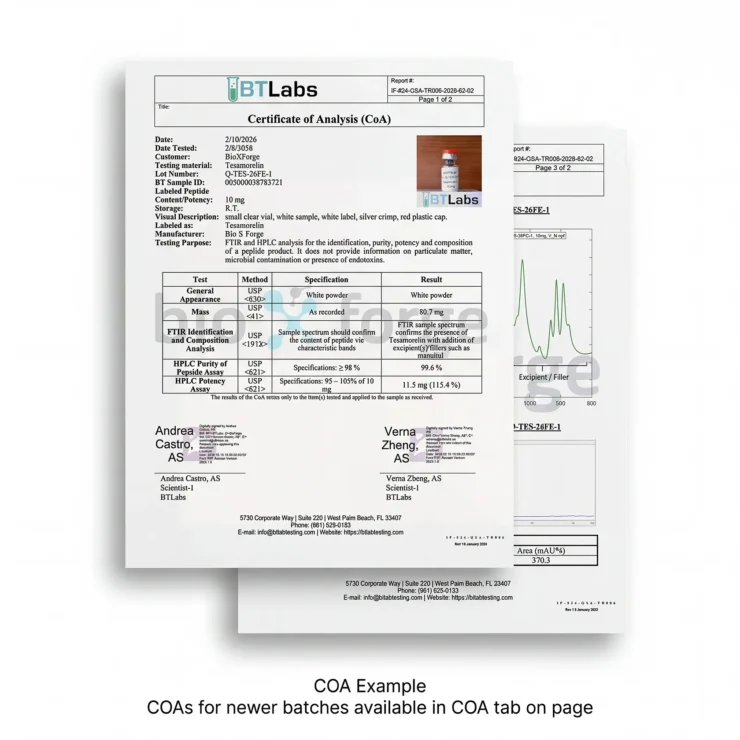



Tesamorelin is a synthetic peptide analog of growth hormone–releasing hormone (GHRH) engineered to enhance metabolic stability while retaining high affinity for the GHRH receptor. Structurally, it is a modified 44–amino acid peptide designed to resist rapid enzymatic degradation, thereby prolonging its biological activity relative to native GHRH. In research contexts, Tesamorelin is classified as a selective GHRH receptor agonist, commonly used to investigate regulation of the somatotropic axis and downstream endocrine signaling pathways.
Upon binding to GHRH receptors on anterior pituitary somatotroph cells, Tesamorelin activates adenylate cyclase, leading to increased intracellular cyclic AMP (cAMP) and subsequent stimulation of growth hormone (GH) synthesis and pulsatile secretion. This receptor-mediated mechanism preserves physiological feedback regulation involving insulin-like growth factor 1 (IGF-1) and hypothalamic control signals. Its enhanced stability allows for sustained receptor engagement, making it useful in laboratory models that examine GH kinetics, receptor sensitivity, and endocrine adaptation over time.
In vitro and preclinical research applications, Tesamorelin is employed to study pituitary signaling cascades, transcriptional regulation of GH, and systemic biomarkers associated with anabolic and metabolic pathways. Investigators may use it to explore interactions between GH signaling and lipid metabolism, glucose regulation, or tissue-specific receptor expression. Because it stimulates endogenous GH release rather than supplying exogenous hormone, it provides a controlled means of evaluating upstream regulatory mechanisms within intact feedback systems.
Overall, Tesamorelin is regarded as a research-grade GHRH analog with improved pharmacokinetic characteristics compared to earlier peptides in its class. Its receptor specificity and extended activity profile make it a valuable compound for laboratory investigations focused on neuroendocrine regulation, metabolic signaling, and somatotropic axis physiology. It is intended strictly for controlled laboratory research use.