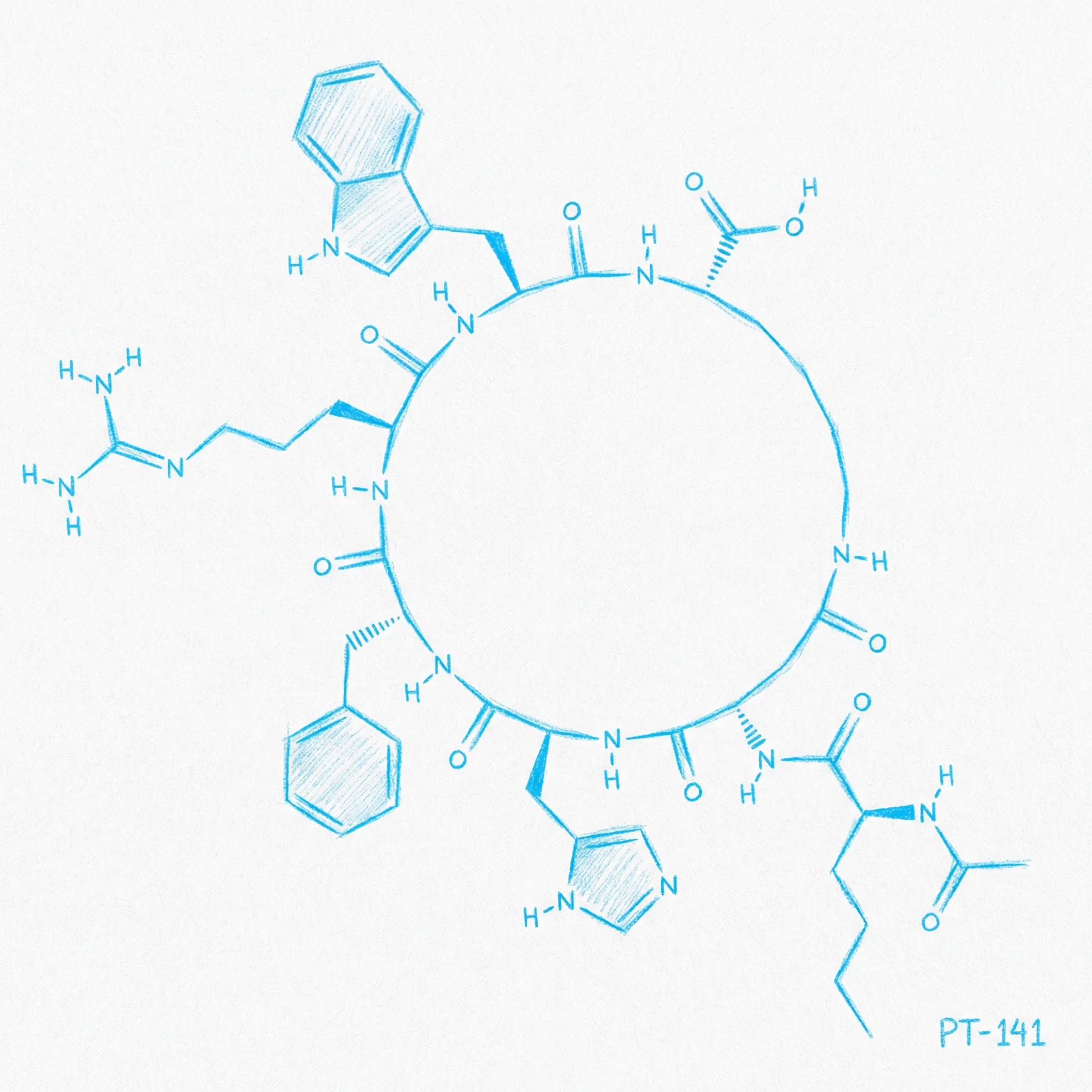
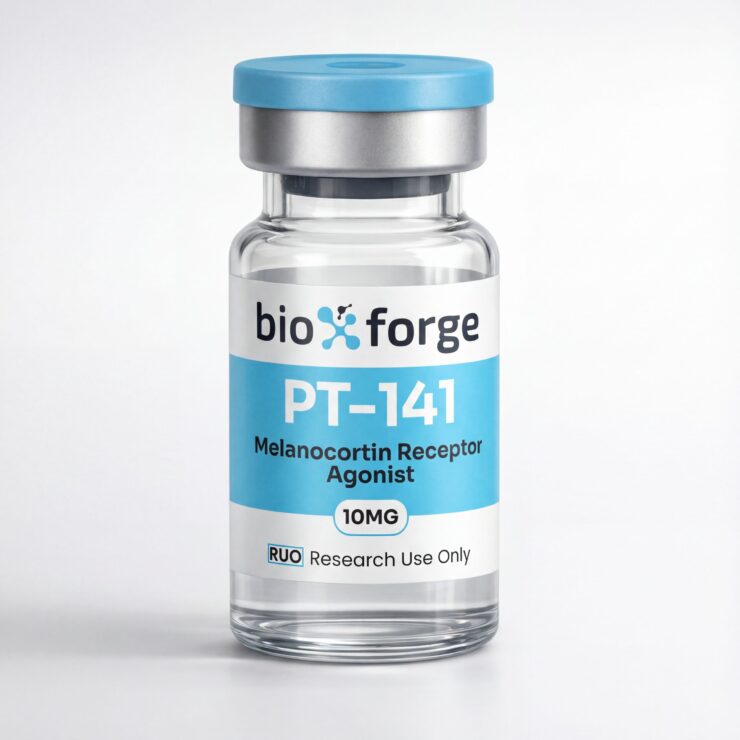
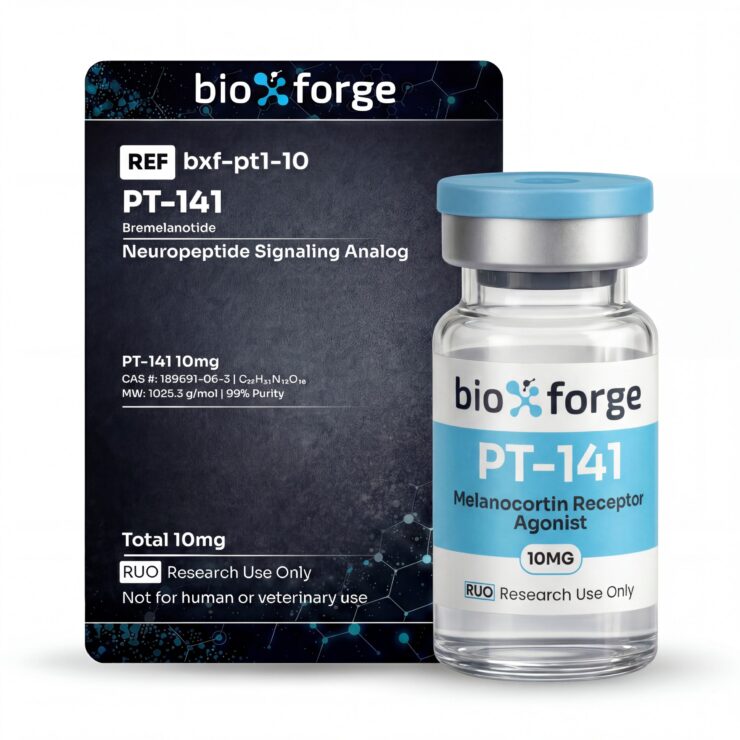
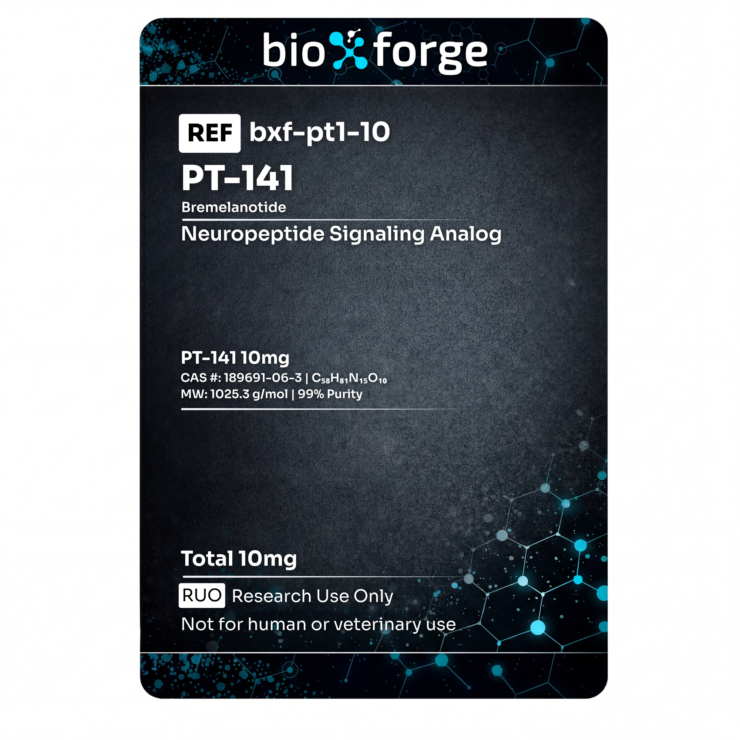
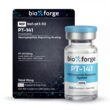
PT-141, also known as Bremelanotide, is a synthetic cyclic heptapeptide derived from the melanocortin analog Melanotan II. Structurally modified to enhance receptor selectivity and pharmacological stability, PT-141 functions as a melanocortin receptor agonist, with primary activity at melanocortin-4 (MC4R) and melanocortin-3 (MC3R) receptors. In laboratory research settings, it is classified as a centrally acting melanocortin peptide used to investigate neuroendocrine and behavioral signaling pathways.
Mechanistically, PT-141 binds to melanocortin receptors, activating adenylate cyclase and increasing intracellular cyclic AMP (cAMP) levels. Activation of MC4R in particular has been studied in the context of central nervous system regulation of autonomic and neurobehavioral processes. Unlike phosphodiesterase-5 inhibitors, which act peripherally on vascular smooth muscle, PT-141’s activity is mediated centrally through hypothalamic melanocortin pathways, making it useful for examining brain-driven regulatory mechanisms independent of peripheral vasodilatory effects.
In vitro and preclinical applications, PT-141 is utilized to evaluate receptor binding kinetics, downstream transcriptional responses, and neuropeptide-mediated signaling cascades. Researchers may employ it to explore melanocortin system interactions with dopaminergic and oxytocinergic pathways, as well as broader neuroendocrine integration. Its cyclic structure confers enhanced stability compared to linear α-MSH fragments, supporting reproducibility in controlled experimental protocols.
Overall, PT-141 is regarded as a research-grade melanocortin receptor agonist used to probe central melanocortin signaling and neuroendocrine regulation. Its defined receptor profile and mechanistic specificity make it a valuable compound for laboratory investigations into peptide-mediated central nervous system processes. It is intended strictly for research use in regulated laboratory environments.