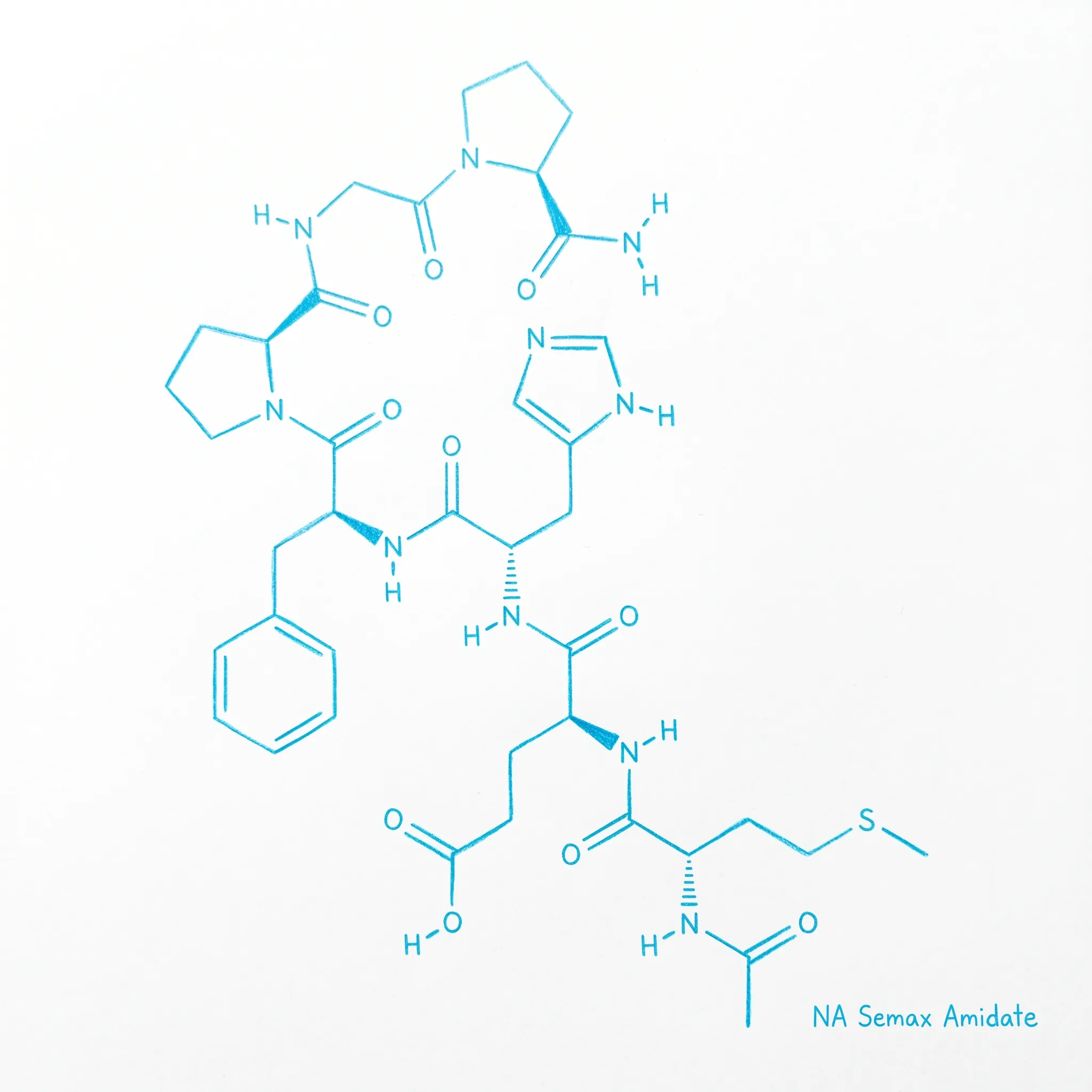
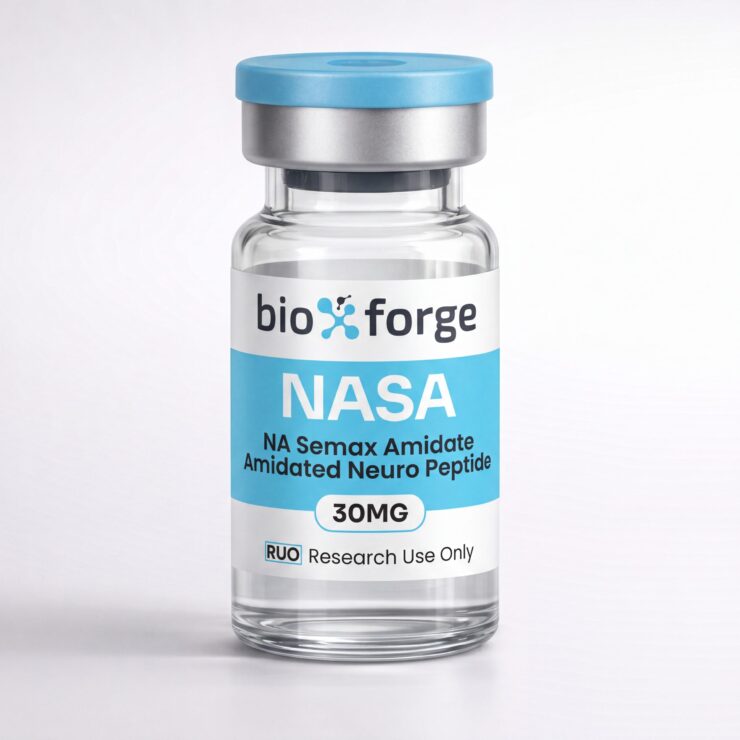





NA Semax Amidate is a synthetic peptide analog derived from the Semax peptide family, incorporating both N-acetylation and C-terminal amidation modifications to enhance molecular stability and resistance to enzymatic degradation. Like Semax, it originates from a modified fragment of adrenocorticotropic hormone (ACTH 4–10), but the additional structural modifications alter its pharmacokinetic characteristics in experimental systems. In laboratory research settings, NA Semax Amidate is classified as an amidated neuroregulatory peptide analog and is commonly utilized to investigate neurotrophic signaling and peptide-mediated central nervous system pathways.
Mechanistically, NA Semax Amidate has been studied for its influence on neurotrophin-associated signaling networks, including pathways linked to brain-derived neurotrophic factor (BDNF), CREB activation, and neuronal plasticity. Experimental models suggest that the peptide may modulate neurotransmitter-related signaling and gene expression associated with neuronal adaptation and stress response. The N-acetyl and amidation modifications are believed to improve metabolic stability and prolong biological activity relative to unmodified peptide analogs, making it useful for studies requiring extended peptide exposure.
In vitro and preclinical research applications commonly include evaluation of neurotrophic factor expression, receptor signaling cascades, oxidative stress biomarkers, and transcriptional responses associated with neuronal function. Investigators may employ NA Semax Amidate in cell culture systems or animal models to examine peptide stability, duration of signaling activity, and downstream molecular responses. Its modified structure allows researchers to compare the effects of peptide engineering on pharmacodynamic and pharmacokinetic behavior within controlled laboratory environments.
Compared with standard Semax, NA Semax Amidate retains the core neuroregulatory peptide sequence but incorporates chemical modifications designed to increase resistance to enzymatic cleavage and potentially extend activity in experimental systems. While both compounds are used to study neurotrophic and neuromodulatory pathways, NA Semax Amidate is often selected when researchers wish to investigate the effects of enhanced peptide stability and prolonged receptor-associated signaling. Both compounds serve as valuable tools for controlled laboratory investigations into neuropeptide-mediated cellular communication and are intended strictly for research use in regulated laboratory settings.