
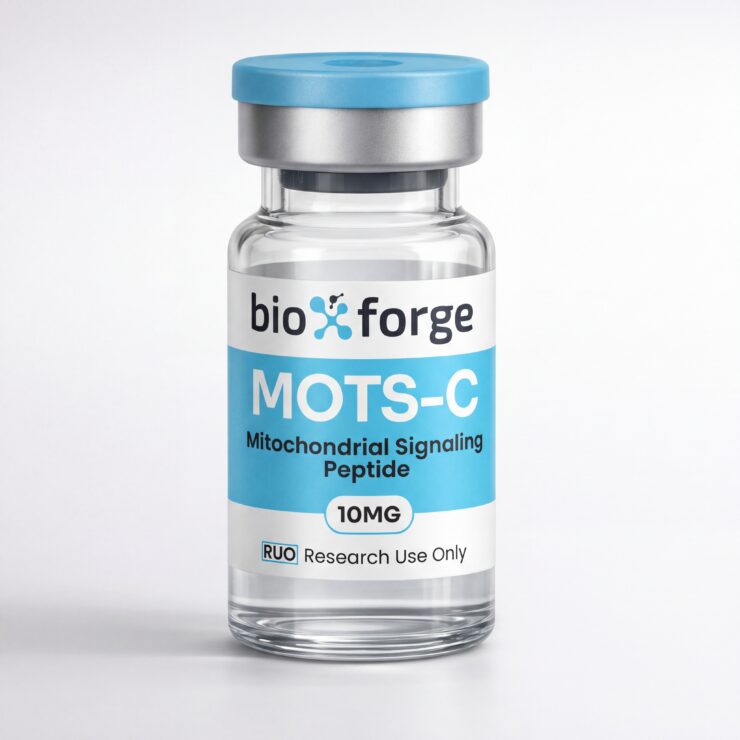
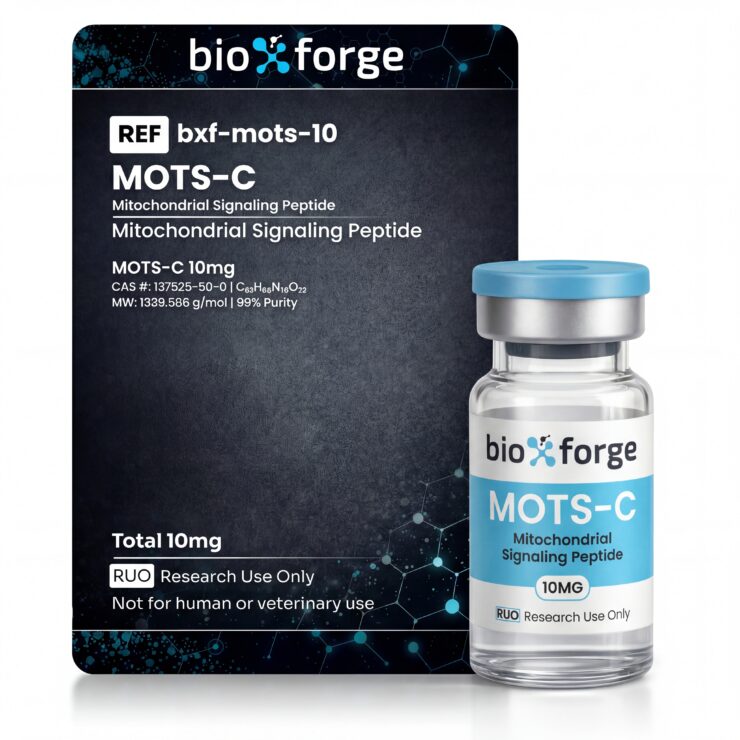
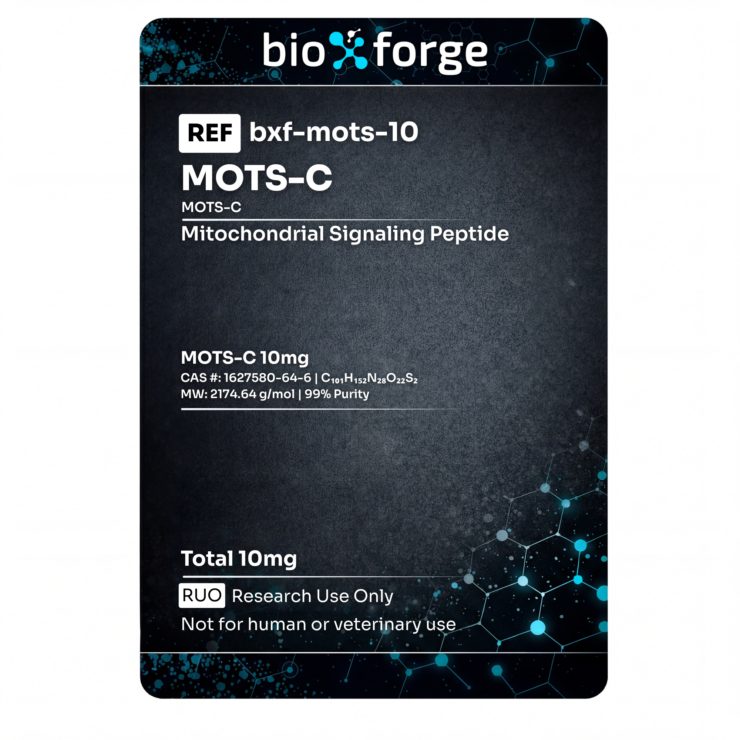





MOTS-c (Mitochondrial Open Reading Frame of the 12S rRNA Type-c) is a 16–amino acid peptide encoded by a short open reading frame within mitochondrial DNA. Unlike the majority of bioactive peptides, which are nuclear genome–derived, MOTS-c originates from the mitochondrial 12S rRNA region and is translated in the cytoplasm. In laboratory research, it is classified as a mitochondria-derived peptide (MDP) and is studied for its role in cellular metabolic regulation and stress-response signaling.
Mechanistically, MOTS-c has been shown in experimental models to influence pathways associated with energy homeostasis and metabolic adaptation. Research suggests it interacts with components of the folate–methionine cycle and may modulate AMP-activated protein kinase (AMPK) signaling under metabolic stress conditions. In certain cellular contexts, MOTS-c has been observed to translocate to the nucleus in response to stress signals, where it may influence transcriptional programs linked to metabolic balance and cellular resilience.
In vitro and preclinical applications commonly involve assessment of mitochondrial function, glucose utilization, oxidative stress markers, and gene expression related to metabolic pathways. Investigators may utilize MOTS-c in cell culture or animal models to examine its effects on insulin signaling cascades, lipid metabolism, and adaptive stress responses. Its relatively small size facilitates synthetic production and controlled dosing in experimental settings.
Overall, MOTS-c is regarded as a research-grade mitochondria-derived peptide used to explore the intersection of mitochondrial signaling and systemic metabolic regulation. Its unique genomic origin and emerging role in cellular stress adaptation make it a valuable compound for controlled laboratory investigations into metabolic physiology and intracellular communication pathways. It is intended strictly for research use in regulated laboratory environments.