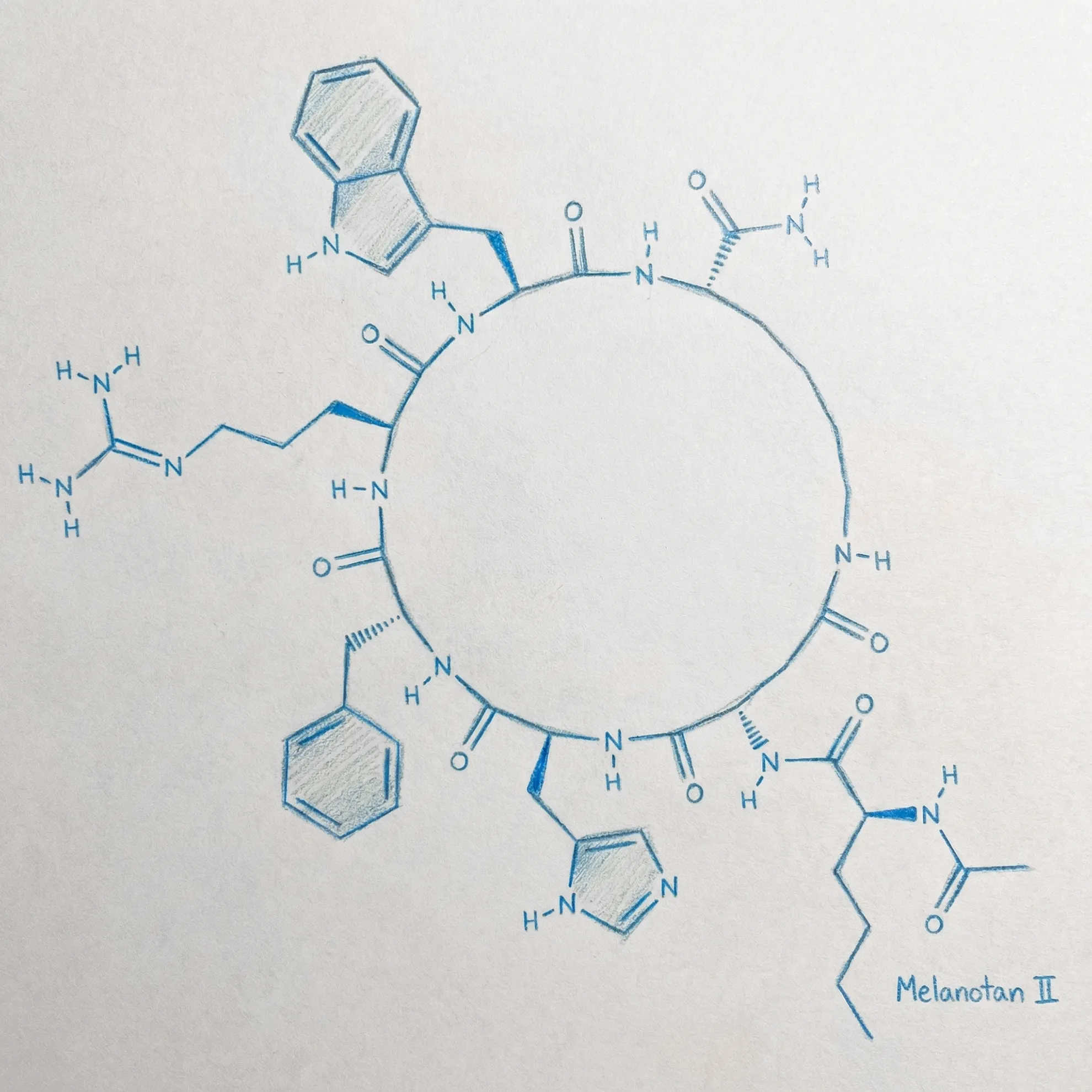
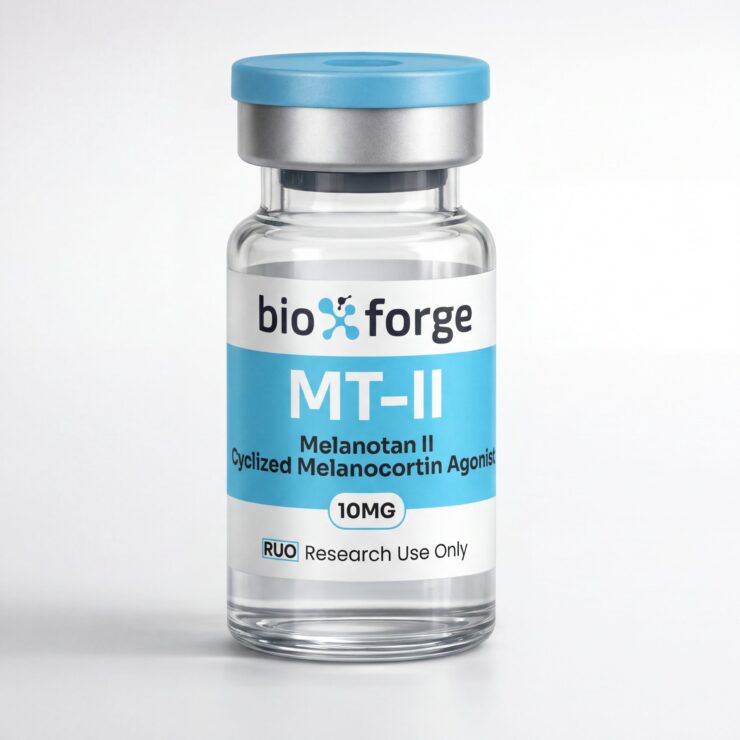

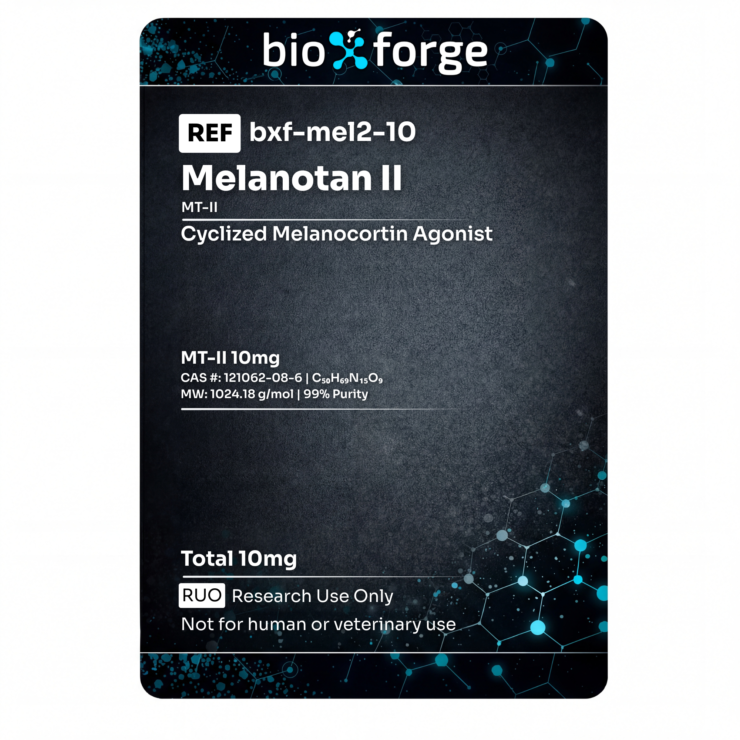





Melanotan II is a synthetic cyclic heptapeptide analog of α-melanocyte–stimulating hormone (α-MSH), designed to enhance receptor affinity and metabolic stability relative to the endogenous hormone. Structurally, it contains strategic amino acid substitutions and cyclization that improve resistance to enzymatic degradation while preserving activity at melanocortin receptors. In laboratory research, Melanotan II is classified as a non-selective melanocortin receptor agonist and is commonly used to investigate melanocortin system signaling.
Mechanistically, Melanotan II binds to melanocortin receptors (primarily MC1R, MC3R, MC4R, and MC5R) with varying affinity, activating adenylate cyclase and increasing intracellular cyclic AMP (cAMP) levels. Activation of MC1R in melanocytes has been associated in experimental models with stimulation of eumelanin synthesis pathways, while MC3R and MC4R engagement has been studied in the context of central nervous system signaling related to energy balance and neuroendocrine regulation. Its receptor profile makes it a useful tool for dissecting melanocortin-mediated intracellular signaling cascades.
In vitro and preclinical applications, Melanotan II is utilized to examine receptor binding kinetics, downstream transcriptional responses, pigment-related biochemical pathways, and melanocortin-driven neurobiological mechanisms. Researchers may employ it in controlled systems to evaluate cAMP-dependent gene expression, peptide stability, and receptor subtype selectivity. Its cyclic structure provides enhanced stability compared to linear α-MSH fragments, supporting reproducibility in laboratory dosing paradigms.
Overall, Melanotan II is regarded as a research-grade melanocortin receptor agonist used to explore pigmentation biology and broader melanocortin-associated signaling networks. Its defined structural modifications and well-characterized receptor activity make it a valuable compound for controlled laboratory investigations. It is intended strictly for research use in regulated laboratory environments.