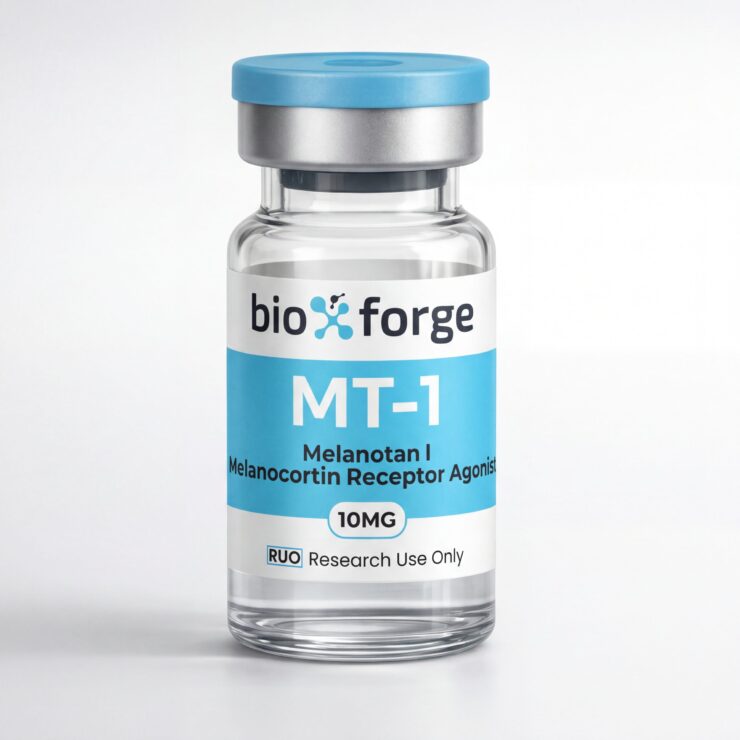
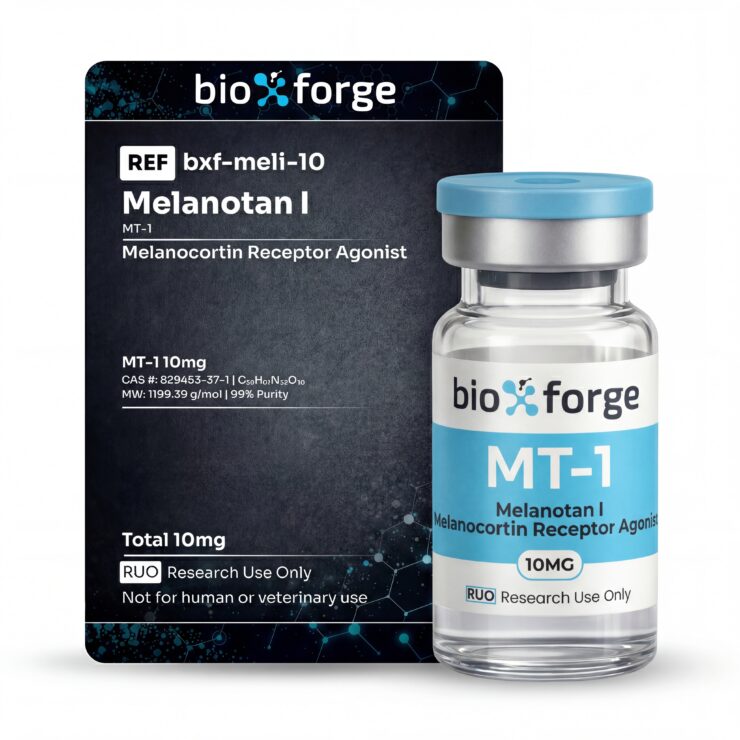
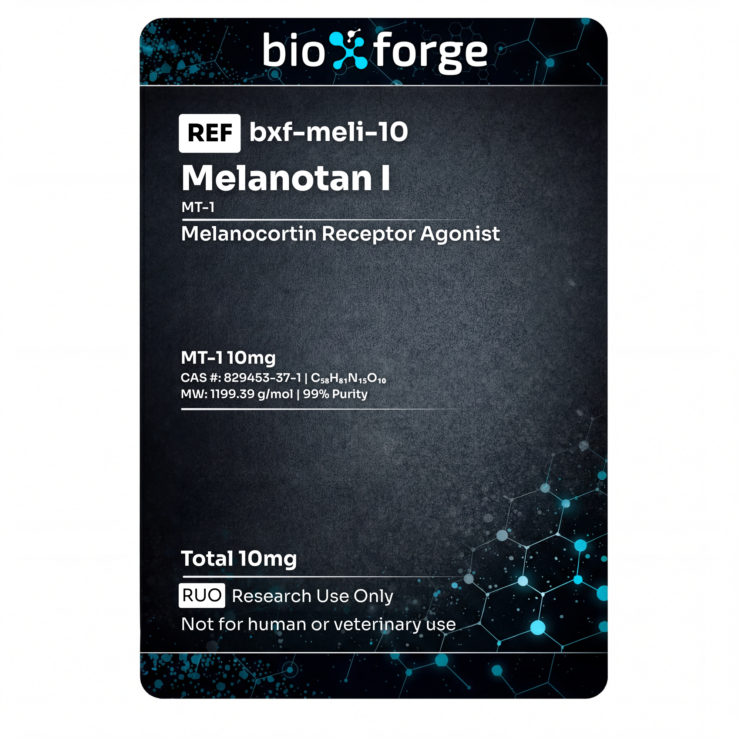
Melanotan, commonly referring to Melanotan I (also known as afamelanotide in clinical literature), is a synthetic linear peptide analog of α-melanocyte–stimulating hormone (α-MSH). It was developed to enhance receptor selectivity and improve stability relative to the endogenous hormone. In laboratory research settings, Melanotan is classified as a melanocortin receptor agonist, with primary activity at the melanocortin-1 receptor (MC1R), which is expressed on melanocytes and involved in pigmentation signaling pathways.
Mechanistically, Melanotan binds to MC1R and activates adenylate cyclase, resulting in increased intracellular cyclic AMP (cAMP) levels. This signaling cascade promotes transcriptional activation of genes involved in melanogenesis, including those regulating eumelanin synthesis. Compared to broader melanocortin analogs, Melanotan I demonstrates greater selectivity for MC1R over central melanocortin receptors such as MC3R and MC4R, making it particularly useful in studies focused on peripheral melanocyte biology rather than central neuroendocrine effects.
In vitro and preclinical research applications, Melanotan is utilized to investigate receptor binding kinetics, melanin production pathways, and downstream transcriptional responses in melanocyte cultures. Researchers may assess its influence on tyrosinase activity, oxidative stress modulation within pigment cells, and protective responses to ultraviolet-associated cellular stress. Its defined peptide sequence allows for reproducible synthesis and controlled dosing in experimental protocols.
Overall, Melanotan is regarded as a research-grade melanocortin receptor agonist used to explore pigmentation biology and melanocortin-mediated signaling pathways. Its receptor selectivity and well-characterized mechanism of action make it a valuable compound for controlled laboratory investigations. It is intended strictly for research use in regulated laboratory environments.