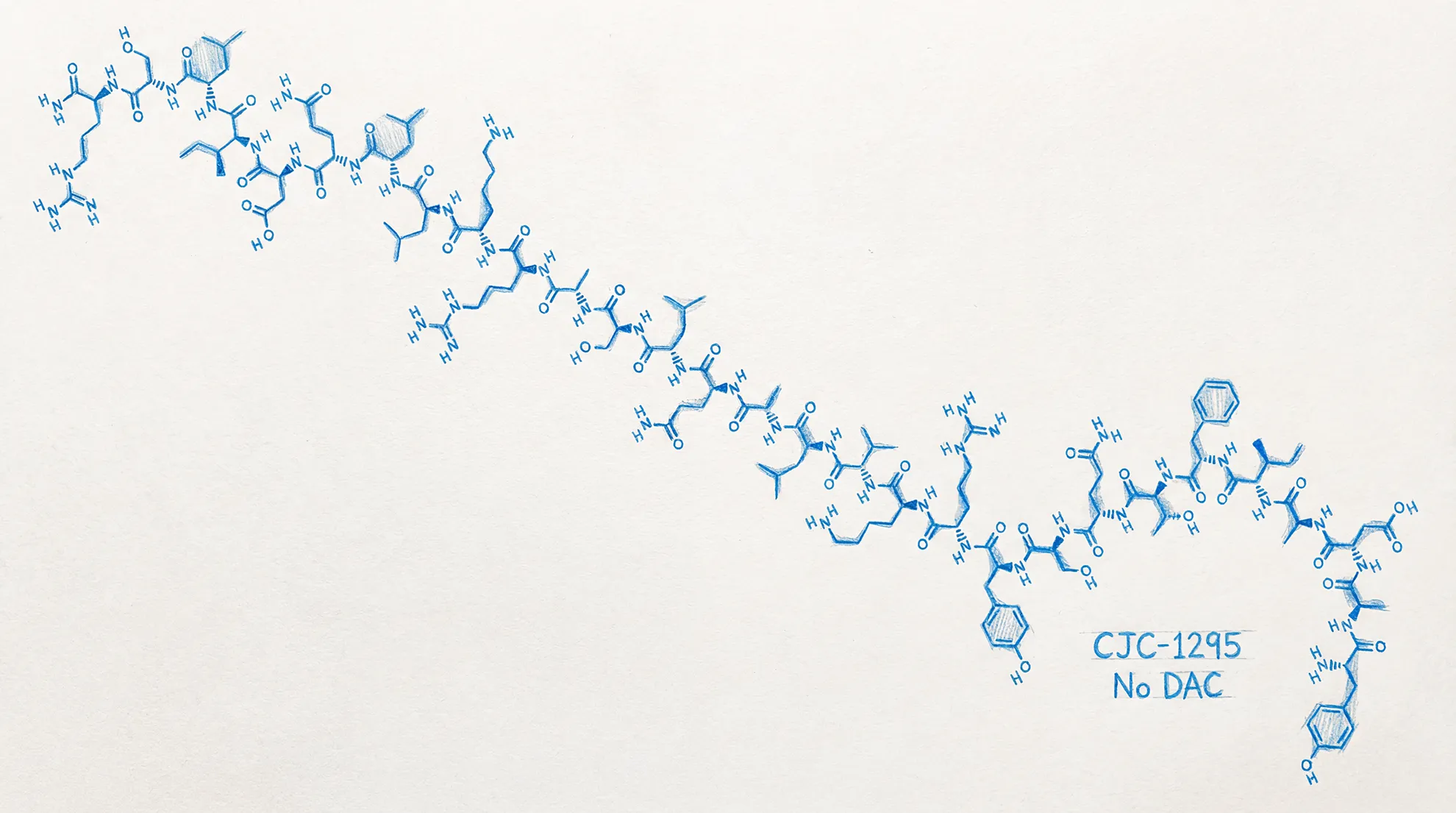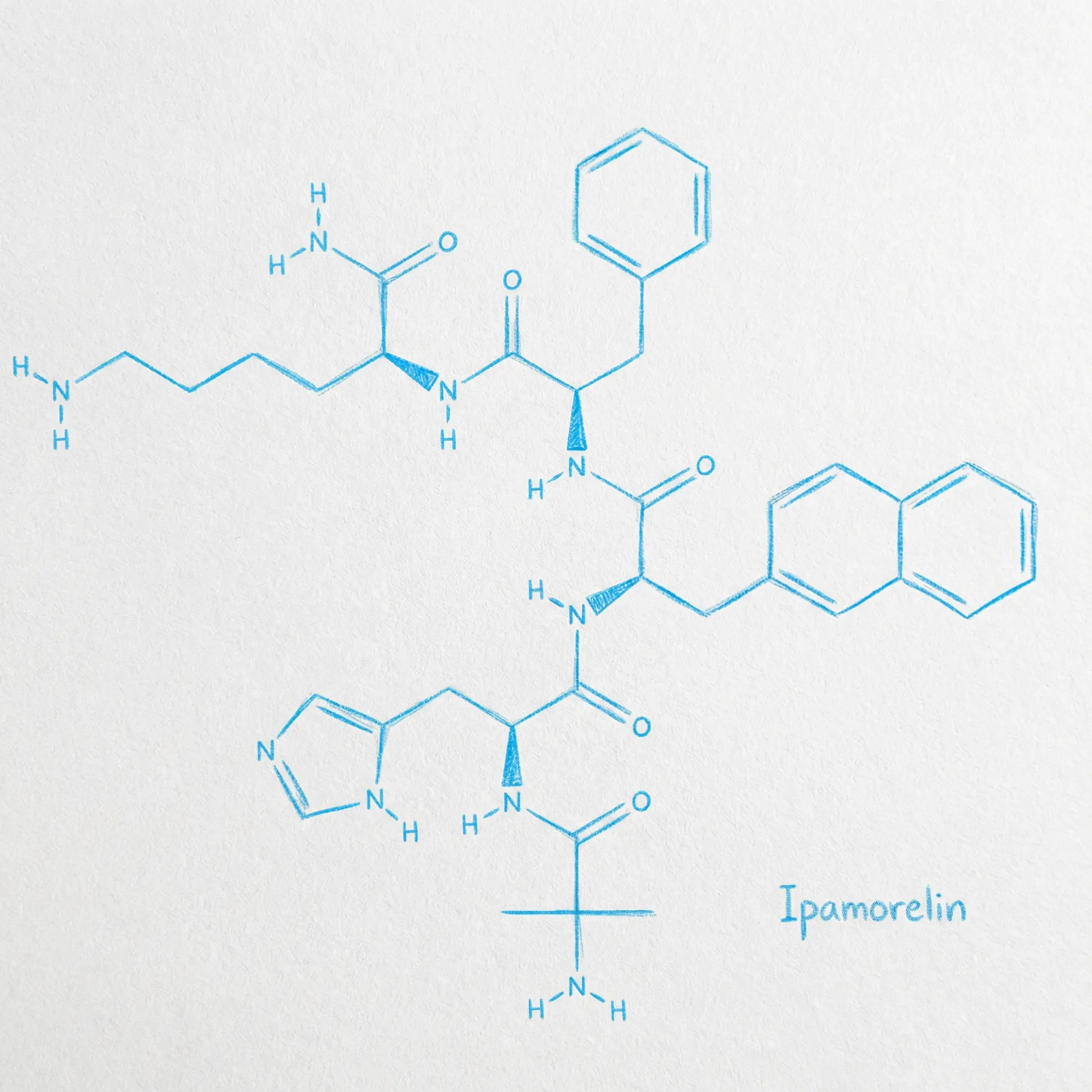
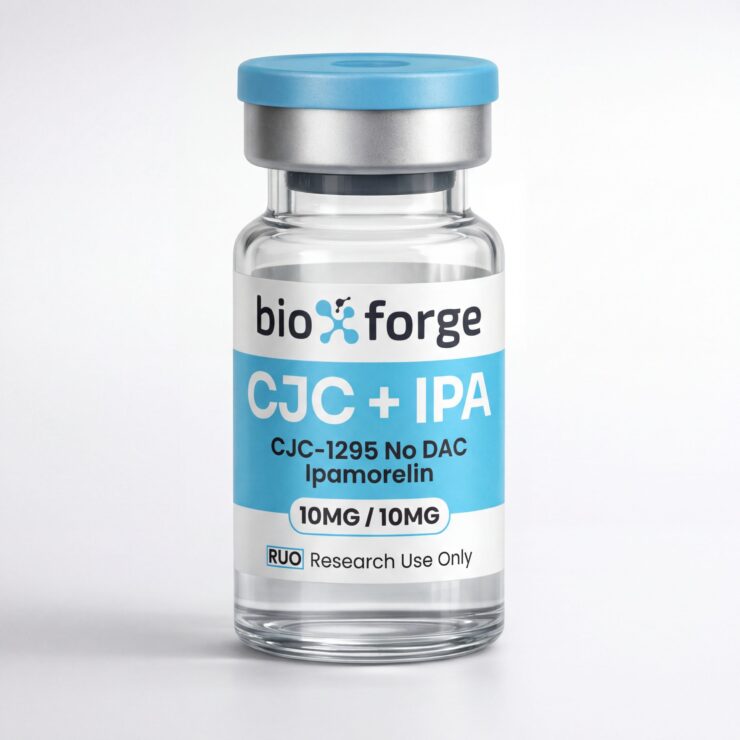
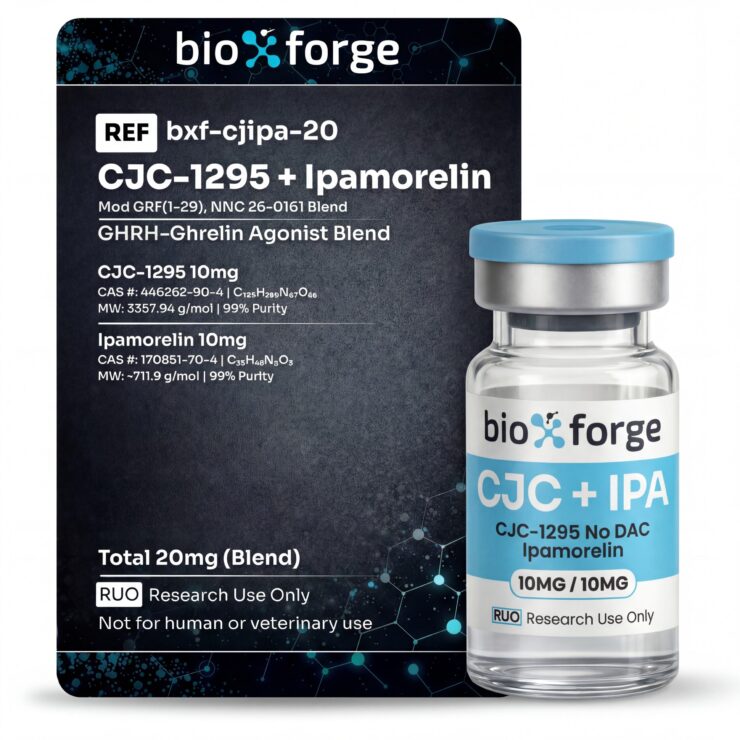
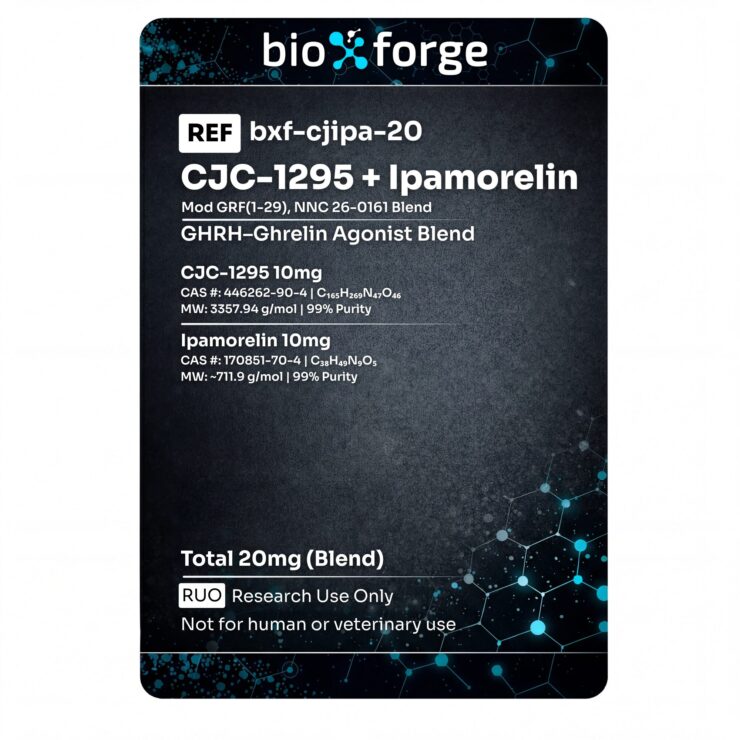
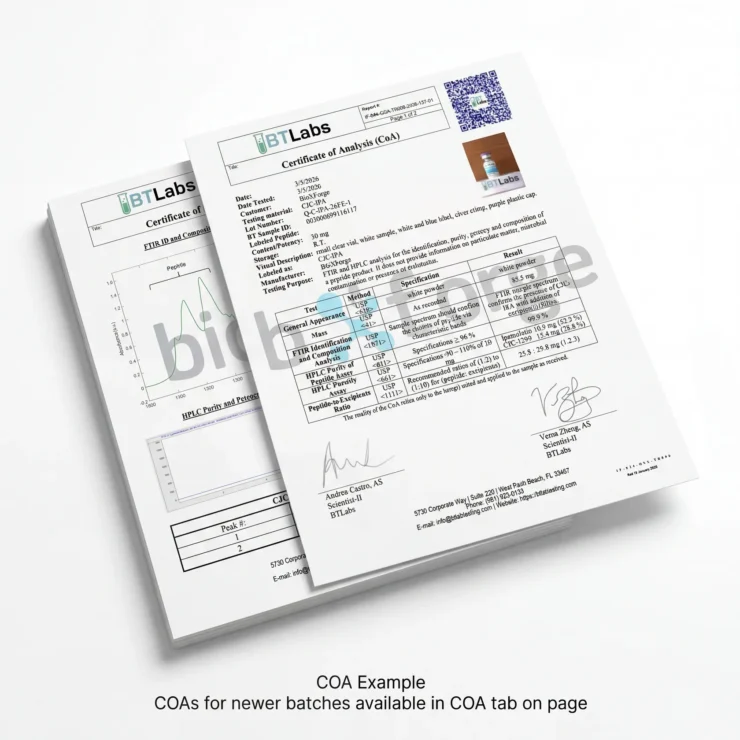

CJC-1295 No DAC and Ipamorelin are synthetic peptides commonly utilized in laboratory research to examine regulation of the somatotropic (growth hormone) axis. CJC-1295 No DAC is a modified growth hormone–releasing hormone (GHRH 1–29) analog designed to stimulate endogenous growth hormone (GH) release via selective activation of GHRH receptors on anterior pituitary somatotroph cells. Ipamorelin, in contrast, is a selective growth hormone secretagogue receptor (GHS-R1a) agonist that mimics the activity of ghrelin, promoting GH release through a distinct receptor-mediated pathway. Together, they provide complementary stimulation of GH secretion via separate but converging signaling mechanisms.
Mechanistically, CJC-1295 No DAC increases intracellular cyclic AMP (cAMP) following GHRH receptor activation, supporting GH gene transcription and pulsatile secretion in a physiologically regulated manner. Ipamorelin activates the ghrelin receptor, triggering phospholipase C–mediated intracellular calcium mobilization and promoting GH release without significant activation of ACTH or cortisol pathways in experimental models. Because these peptides act through different receptors, their concurrent use in research settings allows investigators to study synergistic or additive effects on GH pulse amplitude and frequency while maintaining endogenous feedback control via insulin-like growth factor 1 (IGF-1).
In laboratory environments, blending CJC-1295 No DAC and Ipamorelin within a single vial may offer practical and experimental advantages. From a formulation standpoint, co-lyophilization or combined reconstitution can improve handling efficiency, reduce variability in preparation, and maintain consistent dosing ratios during controlled studies. From a mechanistic perspective, simultaneous receptor engagement may produce more robust and physiologically representative GH pulsatility compared to single-agent stimulation, which can be valuable when modeling endogenous hormone dynamics.
Overall, the CJC-1295 No DAC and Ipamorelin combination is regarded as a research-focused peptide pairing used to probe dual-pathway modulation of growth hormone secretion. Its complementary receptor specificity and controlled activation profile make it suitable for in vitro and preclinical investigations examining endocrine signaling, receptor pharmacodynamics, and pulsatile hormone regulation. This peptide blend is intended strictly for controlled laboratory research use.