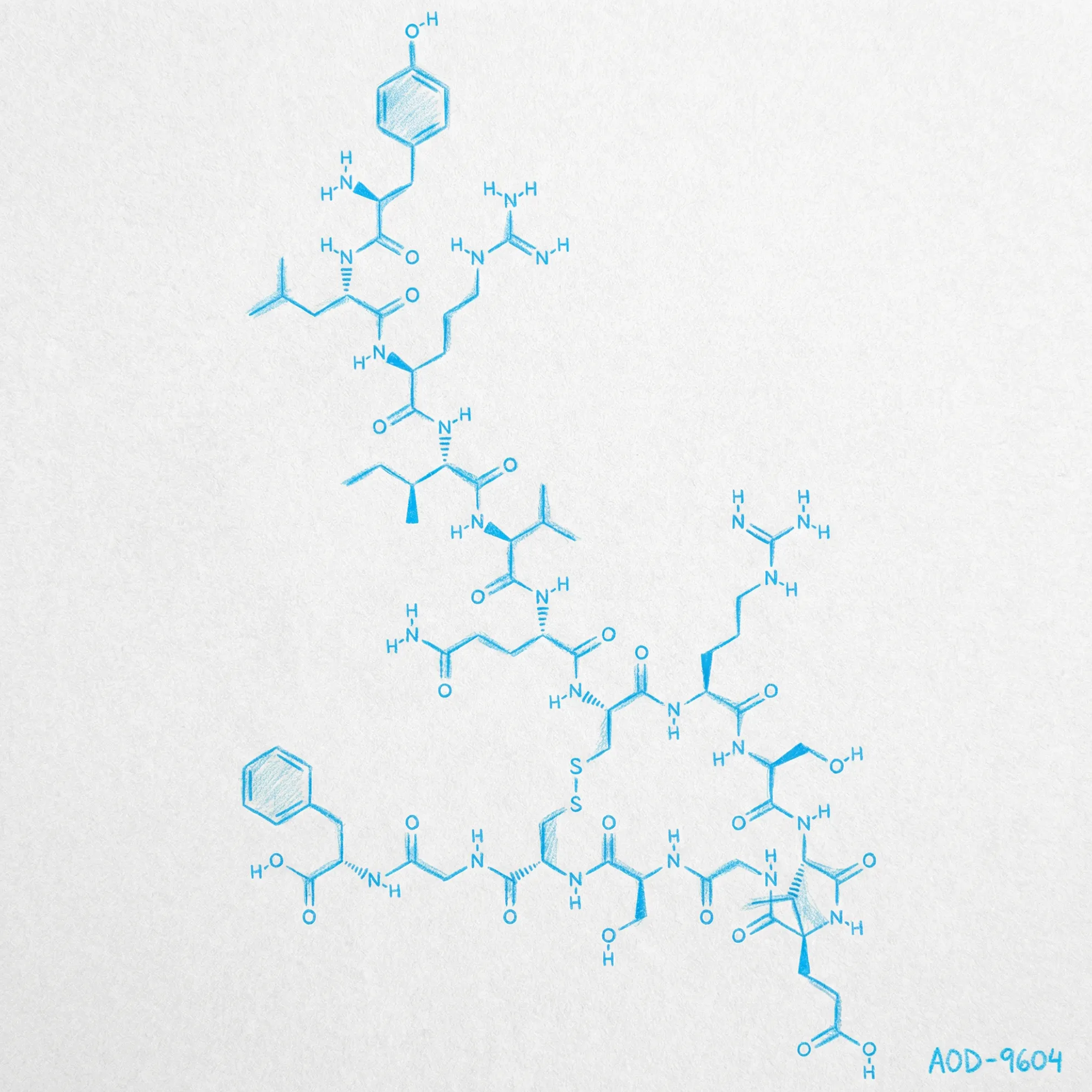
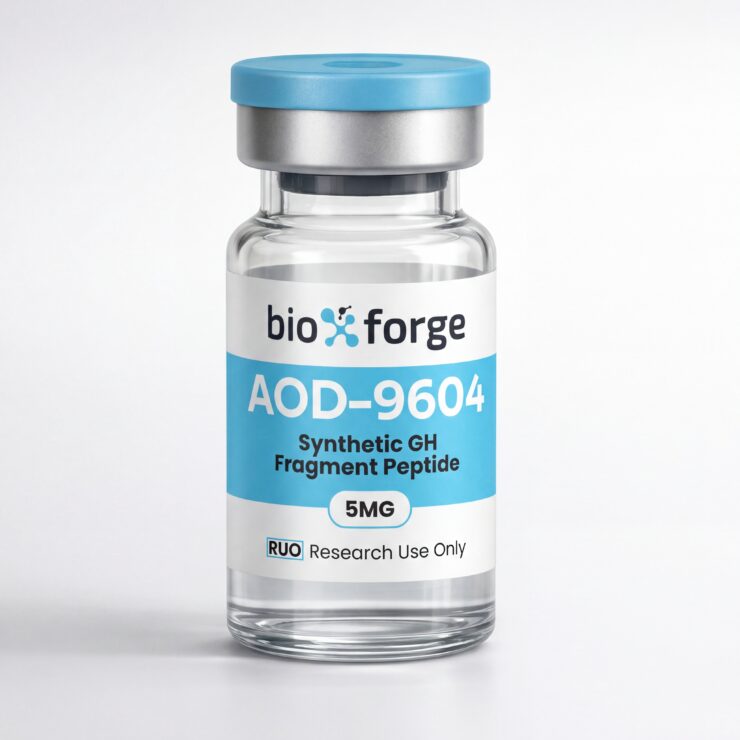
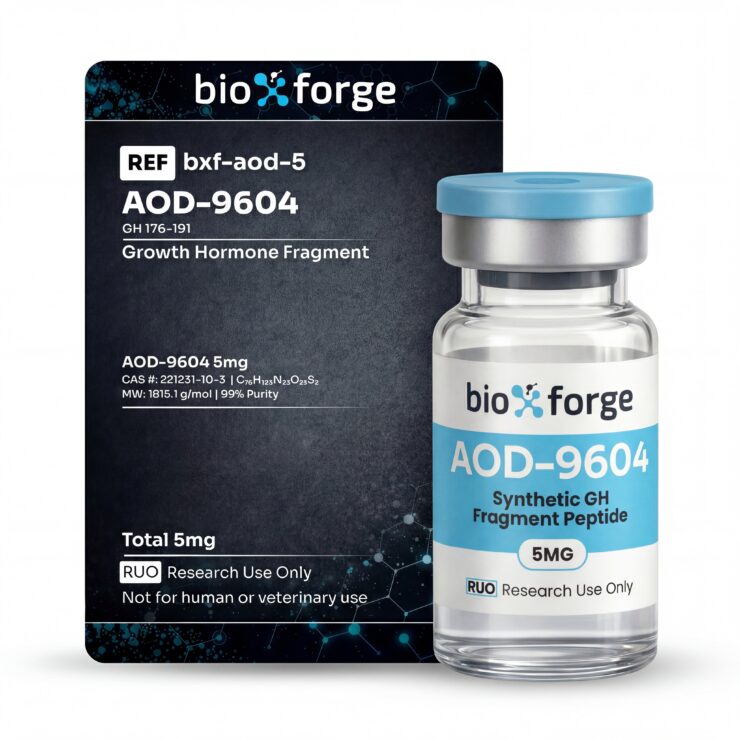
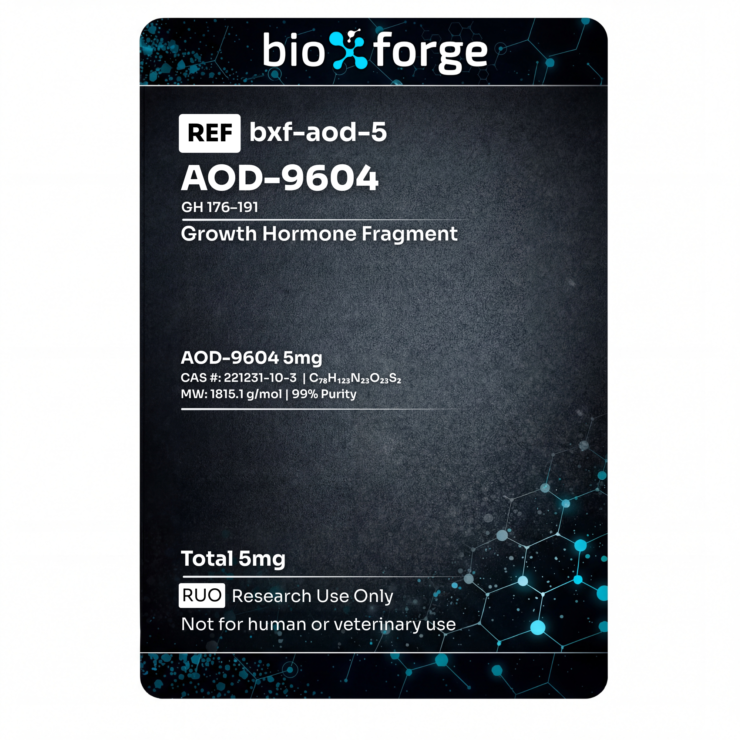
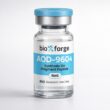
AOD-9604 is a synthetic peptide fragment corresponding to amino acids 177–191 of human growth hormone (hGH). This region represents a modified C-terminal fragment that has been investigated independently of the full-length hormone. In laboratory research, AOD-9604 is classified as a growth hormone–derived peptide fragment and is utilized to study metabolic signaling pathways distinct from classical growth-promoting activity associated with intact hGH.
Mechanistically, AOD-9604 has been examined in experimental models for its influence on lipid metabolism–related pathways. Unlike full-length growth hormone, it does not bind the growth hormone receptor in the same manner nor does it stimulate insulin-like growth factor 1 (IGF-1) production to a significant degree in controlled studies. Instead, research suggests it may interact with intracellular signaling mechanisms involved in lipolysis and fatty acid oxidation, making it of interest in metabolic and adipocyte-focused investigations.
In vitro and preclinical research applications, AOD-9604 is commonly used to evaluate changes in adipocyte function, gene expression associated with lipid regulation, and metabolic biomarker profiles. Its defined peptide fragment structure allows for controlled study of domain-specific activity within the larger growth hormone molecule. Researchers may employ it to differentiate receptor-mediated endocrine effects from fragment-specific intracellular signaling phenomena.
Overall, AOD-9604 is regarded as a research-grade peptide fragment derived from human growth hormone, used to explore selective metabolic signaling pathways under controlled laboratory conditions. Its structural specificity and distinct mechanistic profile make it a useful compound for studying peptide fragment activity separate from full-length hormone function. It is intended strictly for laboratory research use.