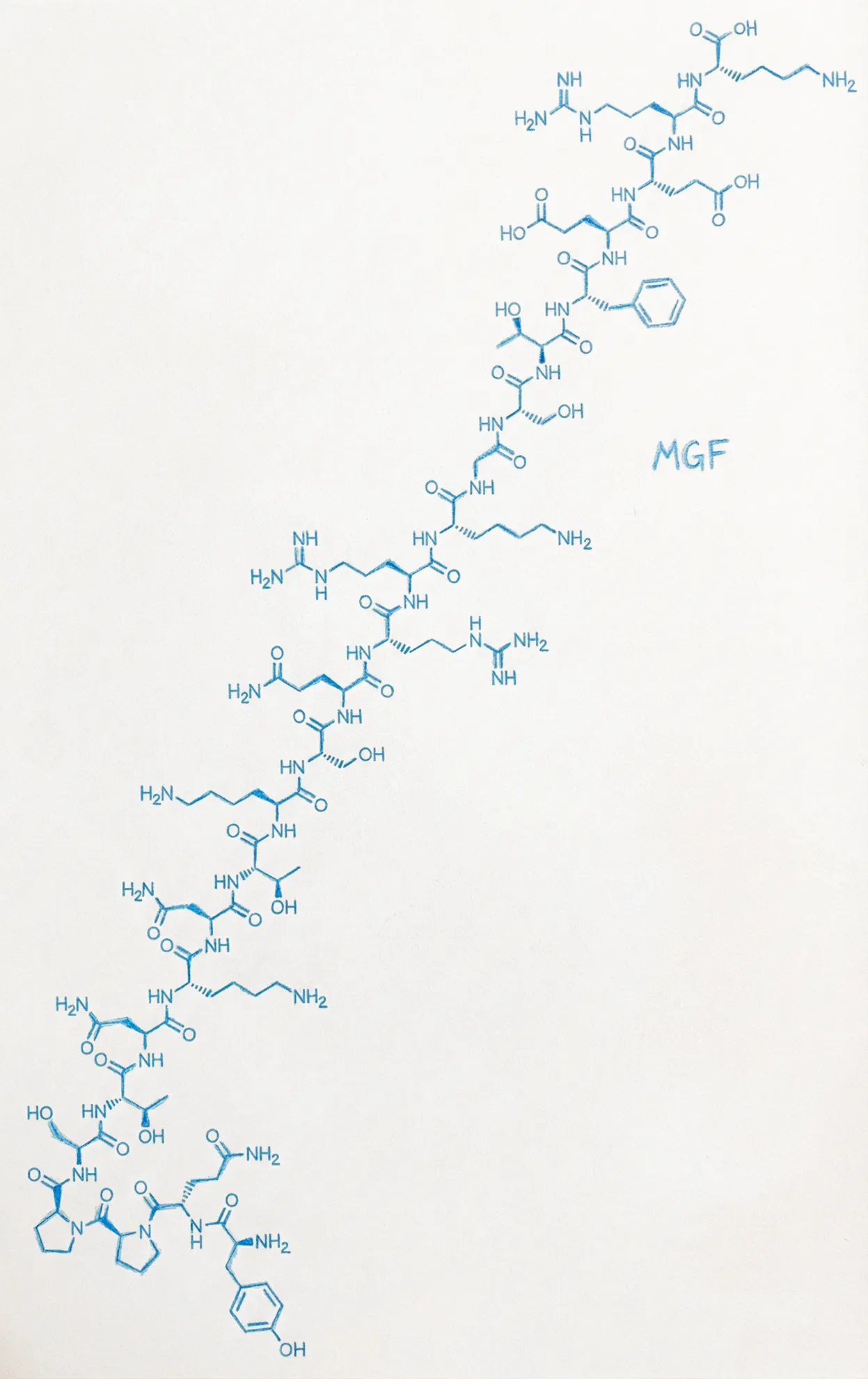
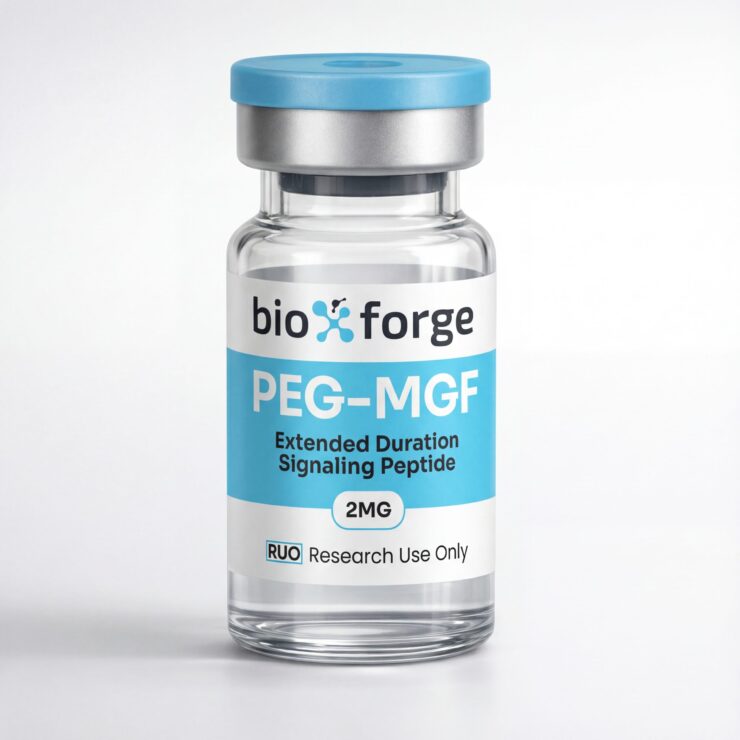
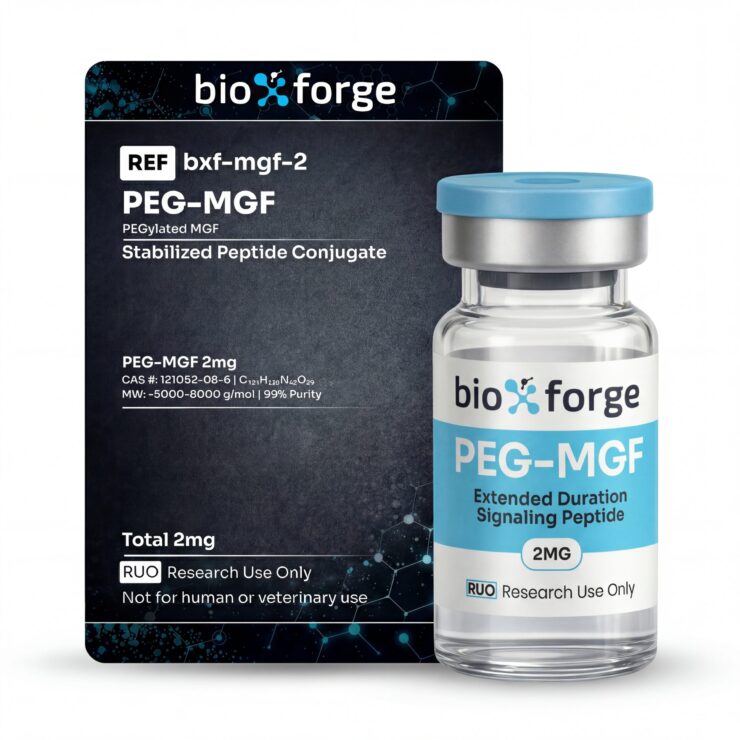



PEG-MGF refers to a pegylated form of mechano growth factor (MGF), a splice variant of insulin-like growth factor-1 (IGF-1) expressed in response to mechanical stress or tissue injury. MGF itself represents the IGF-1Ec isoform, characterized by a distinct C-terminal E-domain sequence that differentiates it from systemic IGF-1. Pegylation (the covalent attachment of polyethylene glycol, PEG) is employed in research formulations to enhance peptide stability, reduce proteolytic degradation, and prolong circulating half-life in experimental models.
Mechanistically, native MGF has been investigated for its role in autocrine and paracrine signaling associated with tissue adaptation, particularly in skeletal muscle. It is believed to participate in satellite cell activation, cellular proliferation, and localized repair processes following mechanical strain. Unlike systemic IGF-1, which exerts endocrine effects via the IGF-1 receptor, MGF’s E-domain region appears to influence cell signaling in a context-dependent manner, although its precise receptor interactions remain an area of ongoing investigation. Pegylation does not alter the core peptide sequence but may modify pharmacokinetic behavior in laboratory studies.
In vitro and preclinical research applications, PEG-MGF is utilized to examine cellular proliferation markers, differentiation pathways, and gene expression associated with tissue remodeling. Investigators may study its effects on myogenic precursor cells, anabolic signaling cascades, and protein synthesis pathways. The pegylated form allows for extended experimental exposure windows and more consistent systemic availability in animal models compared to non-pegylated MGF fragments.
Overall, PEG-MGF is regarded as a research-grade modified peptide used to explore IGF-1 splice variant biology and mechanotransduction-related signaling pathways. Its enhanced stability profile and defined structural origin make it a useful tool for controlled laboratory investigations focused on tissue adaptation, growth factor signaling, and regenerative biology. It is intended strictly for research use in regulated laboratory environments.