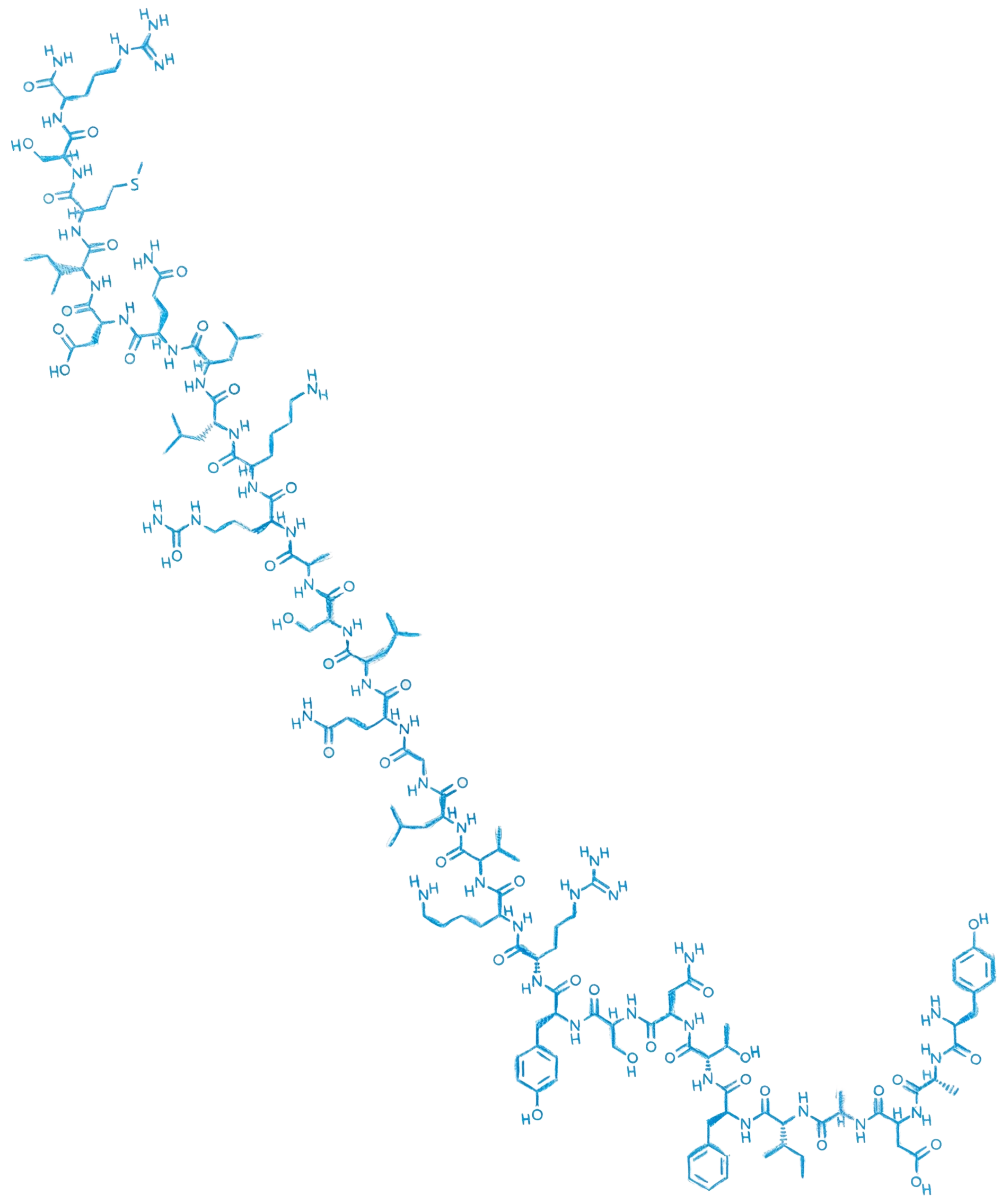
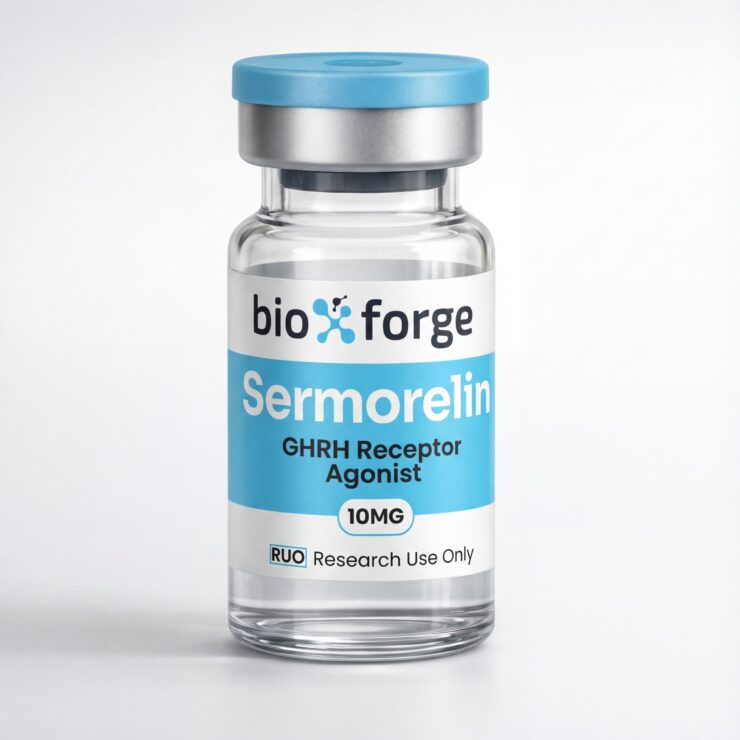





Sermorelin is a synthetic peptide analog corresponding to the first 29 amino acids of endogenous growth hormone–releasing hormone (GHRH 1–29), which represents the biologically active region of the native hypothalamic peptide. In research settings, it is classified as a GHRH receptor agonist, designed to stimulate growth hormone (GH) secretion through activation of GHRH receptors located on anterior pituitary somatotroph cells. Due to its defined structure and receptor specificity, Sermorelin is commonly used as a laboratory tool for investigating pulsatile GH dynamics and hypothalamic–pituitary signaling mechanisms.
Mechanistically, Sermorelin binds to GHRH receptors, activating adenylate cyclase and increasing intracellular cyclic AMP (cAMP) levels. This signaling cascade promotes synthesis and release of growth hormone in a physiologically regulated manner, contingent on pituitary responsiveness. Unlike exogenous growth hormone administration, Sermorelin relies on intact feedback pathways, making it useful in experimental models evaluating endocrine feedback loops, receptor sensitivity, and age-related changes in somatotropic axis function.
In vitro and preclinical research applications, Sermorelin is utilized to assess pituitary cell signaling, GH gene transcription, and downstream biomarkers such as insulin-like growth factor 1 (IGF-1) expression. Investigators may employ it in cell culture systems or controlled animal studies to examine dose-response characteristics, receptor regulation, and temporal secretion patterns. Its relatively short half-life allows for precise experimental control when studying pulsatile hormone release paradigms.
Overall, Sermorelin serves as a well-characterized research peptide for probing growth hormone regulatory pathways. Its receptor-targeted mechanism and established structure–activity profile make it a valuable compound for laboratory investigations focused on endocrine physiology, receptor pharmacology, and neuroendocrine signaling. It is intended strictly for research use in controlled laboratory environments.