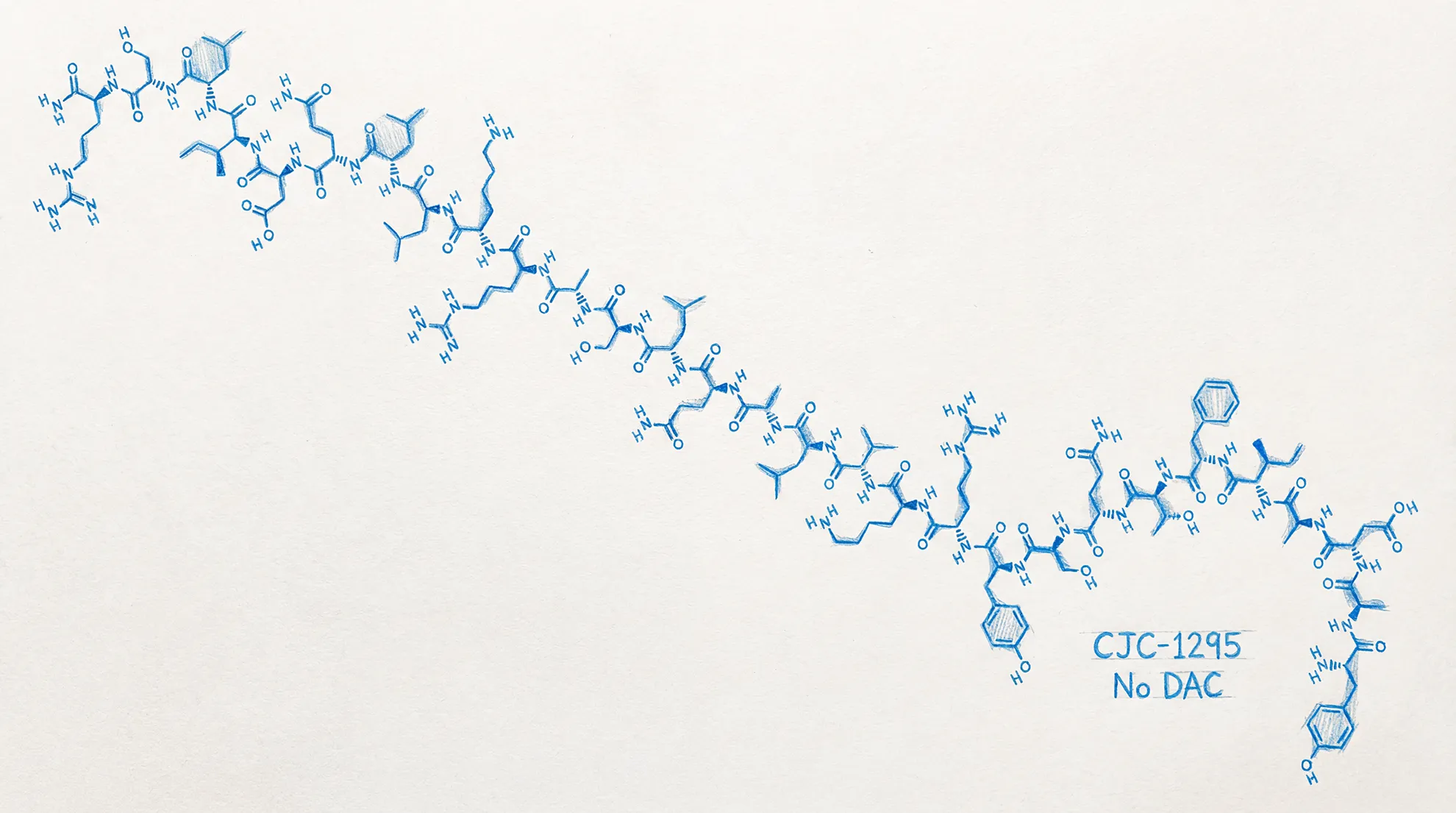
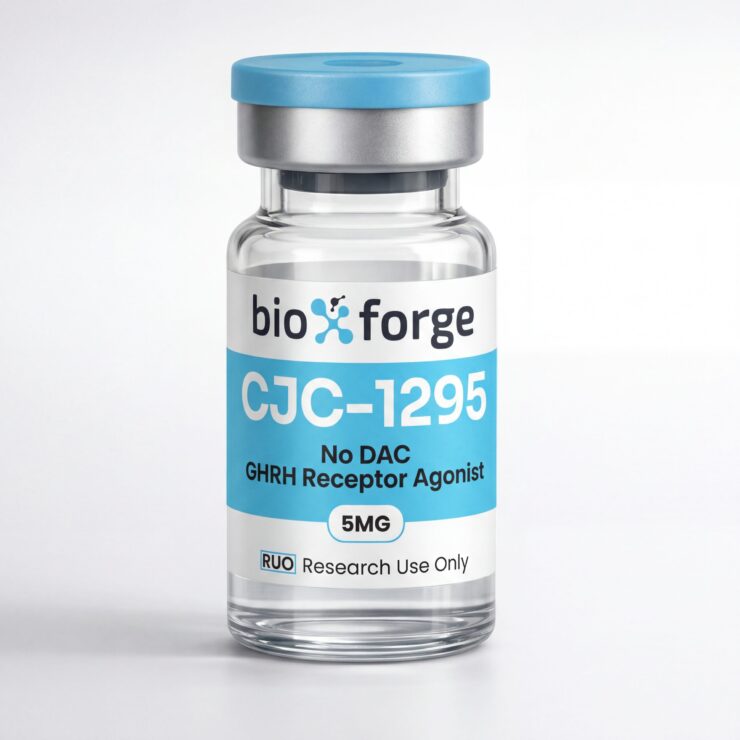

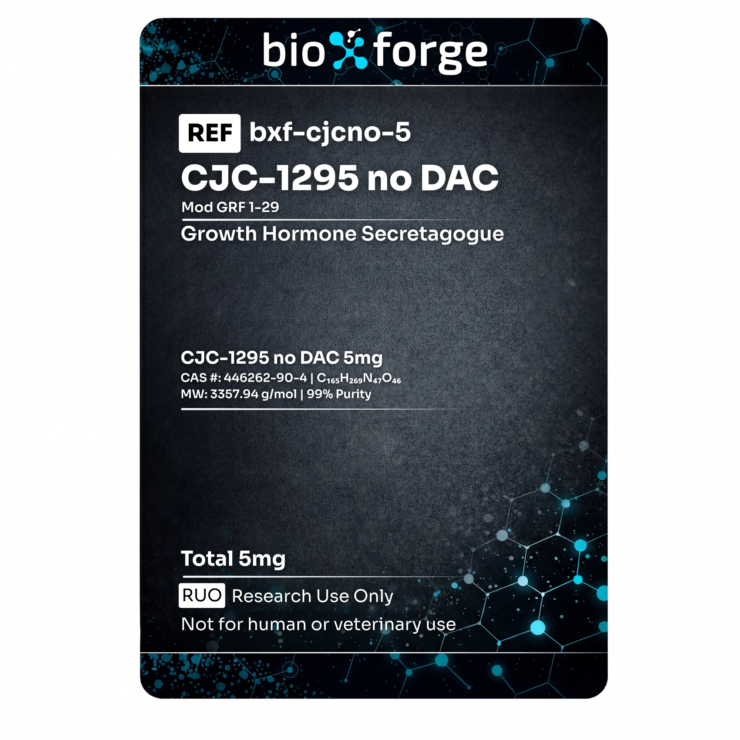
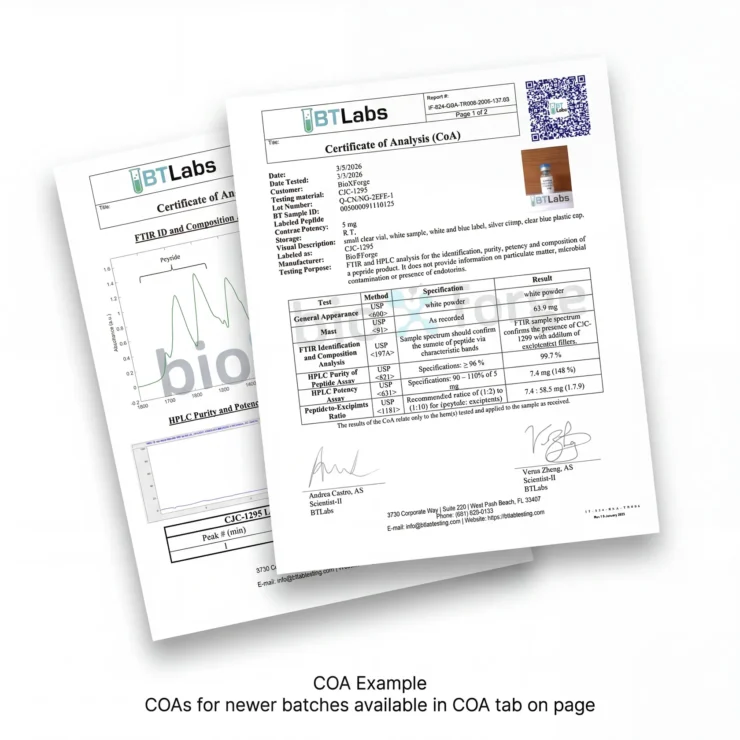



CJC-1295 No DAC is a synthetic analog of growth hormone–releasing hormone (GHRH 1–29) engineered to improve receptor affinity and resistance to rapid enzymatic degradation while retaining a short functional duration of action. Unlike CJC-1295 with Drug Affinity Complex (DAC), the “No DAC” variant does not include the albumin-binding moiety, resulting in a pharmacokinetic profile more closely resembling native GHRH. In research settings, it is classified as a selective GHRH receptor agonist used to investigate hypothalamic–pituitary regulation of growth hormone (GH) secretion.
Mechanistically, CJC-1295 No DAC binds to GHRH receptors on anterior pituitary somatotroph cells, activating adenylate cyclase and increasing intracellular cyclic AMP (cAMP) levels. This signaling cascade stimulates synthesis and pulsatile release of endogenous growth hormone while preserving normal negative feedback regulation through insulin-like growth factor 1 (IGF-1) and hypothalamic somatostatin pathways. Because it lacks the extended half-life conferred by DAC modification, it is particularly useful in laboratory models examining physiologic pulse dynamics and short-interval receptor activation.
In vitro and preclinical research applications, CJC-1295 No DAC is employed to evaluate pituitary receptor signaling, GH gene transcription, and downstream anabolic or metabolic biomarkers. Investigators may use it in controlled experimental systems to study receptor sensitivity, desensitization kinetics, and comparative activity versus other GHRH analogs. Its shorter duration of activity allows for precise temporal control when modeling pulsatile endocrine stimulation paradigms.
Overall, CJC-1295 No DAC is regarded as a research-grade GHRH analog designed for controlled laboratory investigations into somatotropic axis physiology. Its receptor specificity and defined signaling profile make it a useful compound for exploring growth hormone regulatory mechanisms under experimentally controlled conditions. It is intended strictly for research use in laboratory environments.