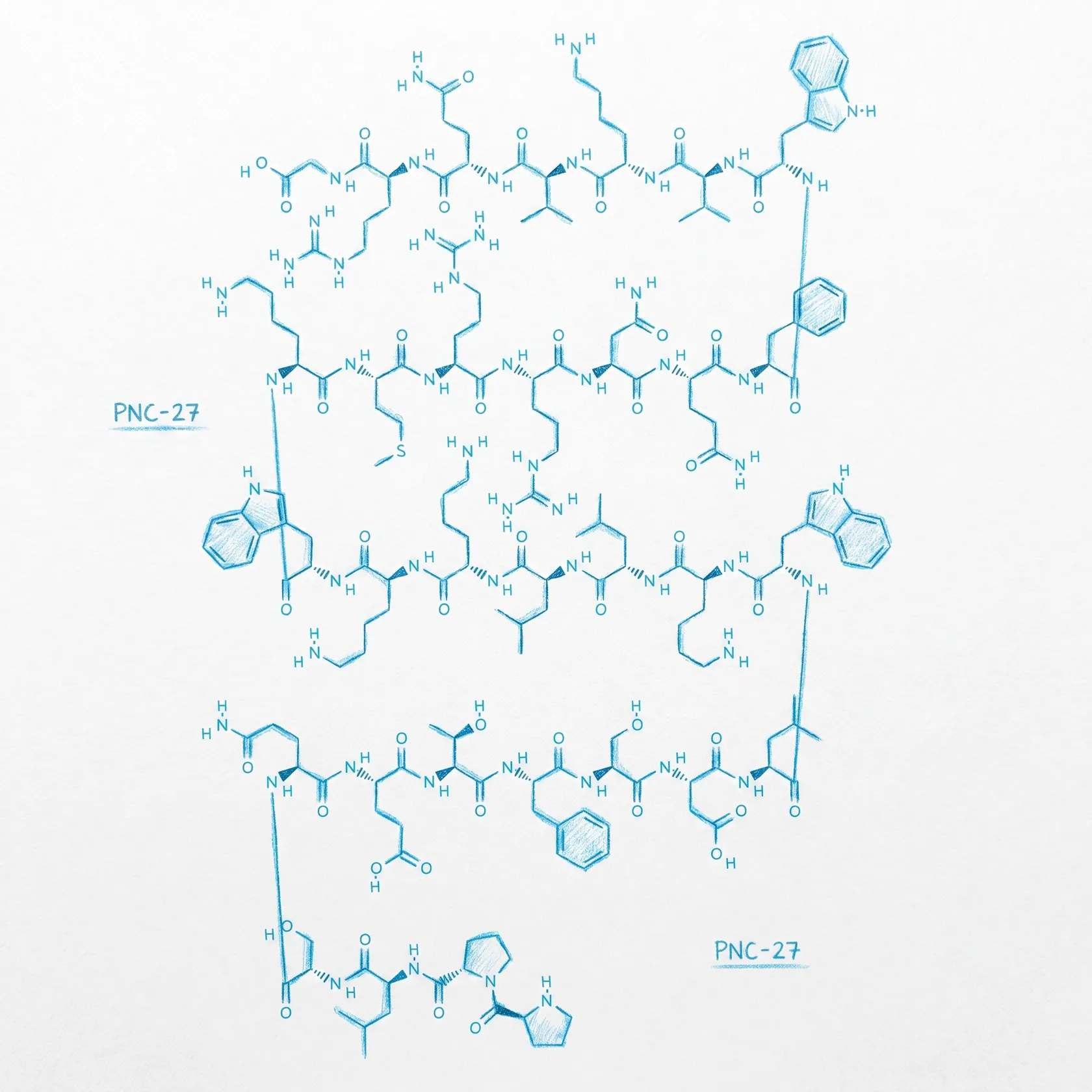
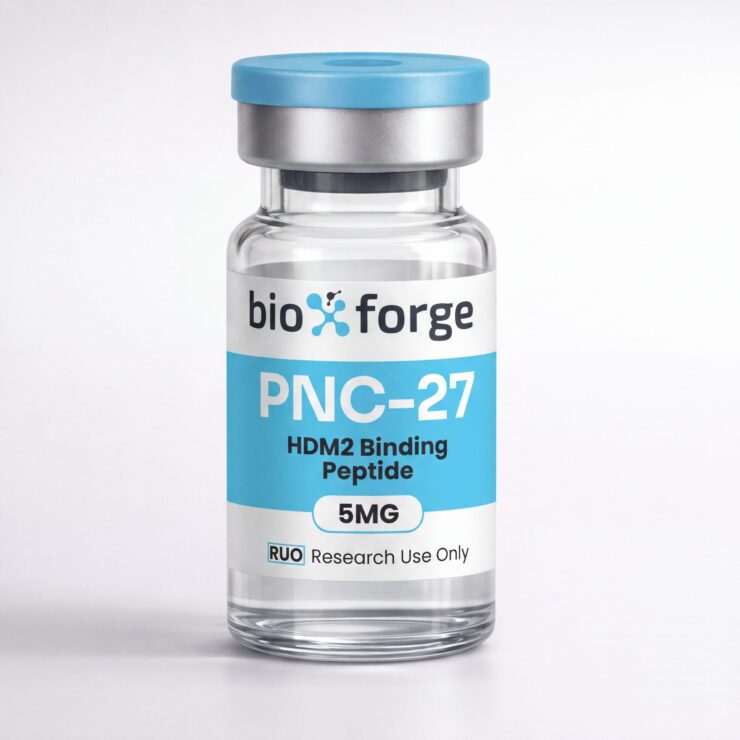

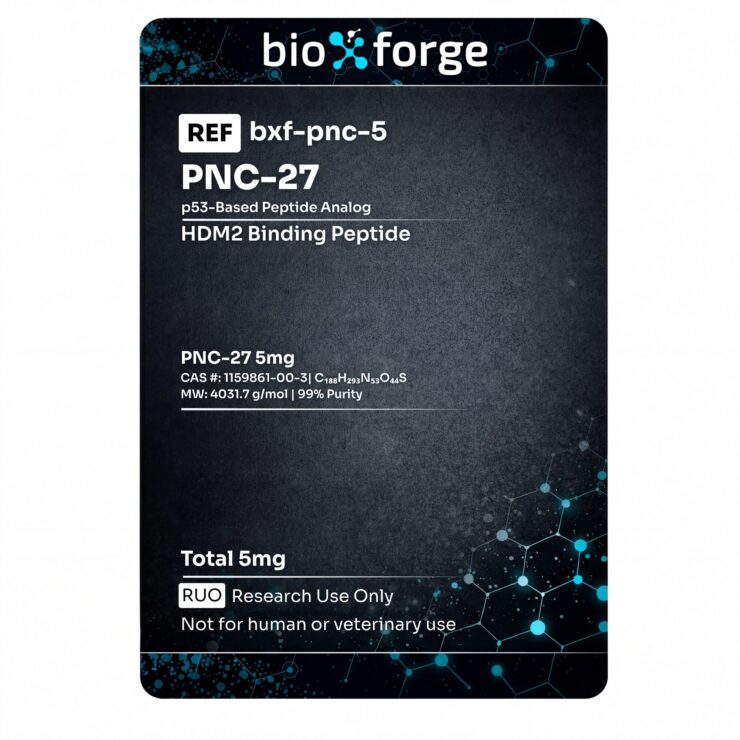


PNC-27 is a synthetic chimeric peptide engineered from a sequence derived from the tumor suppressor protein p53 fused to a membrane-penetrating peptide domain. The compound was designed to facilitate cellular membrane interaction while retaining a p53-related binding motif capable of interacting with HDM2 (also known as MDM2), a regulatory protein involved in p53 pathway modulation. In laboratory research settings, PNC-27 is classified as a p53-derived synthetic peptide analog used to investigate membrane-associated peptide interactions and tumor-related signaling pathways.
Mechanistically, PNC-27 has been studied for its ability to associate with HDM2 expressed on cellular membranes in certain experimental models. Research suggests that the peptide may form membrane-associated complexes capable of altering membrane integrity and downstream signaling behavior. Unlike traditional intracellular p53 pathway modulation, PNC-27 has primarily been examined in the context of membrane-targeted peptide interactions, making it a distinct tool for investigating cell surface–associated regulatory mechanisms.
In vitro and preclinical applications commonly include studies of peptide–membrane interaction dynamics, cellular permeability, and expression patterns of HDM2-associated signaling pathways. Investigators may utilize PNC-27 in cultured cell systems to evaluate membrane localization, peptide binding kinetics, and downstream cellular responses under controlled experimental conditions. Its chimeric design allows researchers to explore how synthetic peptide constructs can combine targeting motifs with membrane-active domains for pathway-specific investigations.
Overall, PNC-27 is regarded as a research-grade synthetic peptide used to study p53-related signaling interactions and membrane-associated peptide activity in laboratory environments. Its engineered structure and targeted mechanistic profile make it a useful compound for controlled investigations into peptide-mediated cellular signaling and membrane biology. It is intended strictly for research use in regulated laboratory settings.